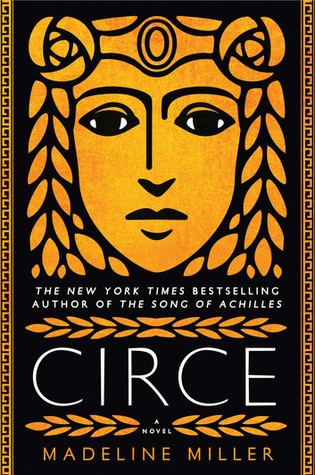
Circe
Madeline Miller (2018)
“The 'witch' of The Odyssey finally speaks — and her story turns out to be about what it costs to become yourself.”
Language Register
Elevated but accessible — mythic cadence without classical distance; first-person psychological intimacy married to epic subject matter
Syntax Profile
Long, unhurried sentences for internal reflection; shorter, more direct sentences when Circe is acting or in conflict. The sentence length maps consistently to Circe's mental state — expansive when contemplative, tightened when threatened or decisive. Miller avoids excessive ornamentation: the prose is lush but never cluttered.
Figurative Language
High but controlled — Miller uses similes generously (plants, light, water, growing things) in a way that feels organic to Circe's observational mode rather than decorative. Metaphor tends toward the natural world: this is not the society-metaphors of Fitzgerald but the garden-metaphors of a woman who has spent centuries learning to read what grows.
Era-Specific Language
Greek term for drugs/potions/spells; Miller uses it to denote Circe's craft specifically, distinguishing it from vague 'magic'
Minor female nature deity; in Miller's usage, specifically a class of being defined by beauty and powerlessness
The fluid that flows in gods' veins instead of blood; signals divine register
One who works with pharmaka; the word from which 'witch' derives
Glory, specifically the renown won by heroes; implicitly questioned throughout as a masculine value system
How Characters Speak — Class & Identity
Circe
First-person retrospective — measured, analytical, but with flashes of raw feeling that break through the retrospective composure. Increasingly direct as the novel progresses.
A narrator who has had centuries to process and is still, in places, not done processing. The retrospective voice is a survival strategy that gradually becomes unnecessary.
Odysseus
Tactical, entertaining, always slightly performing — his sentences tend toward the anecdotal, the vivid, the memorable. He talks the way he navigates: efficiently, colorfully, with his real purpose slightly obscured.
A man so habituated to strategy that honesty is indistinguishable from a particularly effective kind of honesty. Not a liar — but never entirely off guard.
Penelope
Dry, precise, with a wit that has been sharpened to a tool through twenty years of managing hostile men. Her irony is her defense and her pleasure.
Intelligence that has learned to conceal itself — like Circe, but through a different mechanism. Penelope performs adequacy; Circe performed inadequacy. Both were tactics.
The gods (Helios, Hermes, Athena)
Declarative, certain, casually authoritative. They do not ask; they inform. Their language reflects a world in which their will is the definition of reality.
Power that has never been required to justify itself sounds like this: certain, impersonal, slightly bored by its own supremacy.
Telegonus
Immediate, present-tense in feeling, wanting. His speech is the least retrospective in the novel — he is wholly in the moment of desire without the long view his mother has developed.
Youth and mortality together: no long view because there isn't enough past to develop one. His urgency is the urgency of someone who correctly perceives that time is limited.
Narrator's Voice
Circe as retrospective first-person narrator: she is telling us what she knows now about what she didn't understand then. The gap between her knowledge as narrator and her knowledge as character is the engine of the novel's irony and its tenderness. She does not judge her earlier selves harshly, but she is clear about where they were wrong. The voice develops across the novel — early chapters have more mythic distance; later chapters are increasingly intimate and direct, as if Circe has gradually stopped performing the role of narrator and is simply speaking.
Tone Progression
Chapters 1-4
Mythic, observational, wounded
Circe narrates from within a world that has not yet noticed she is looking. The prose has the quality of careful attention from someone who has learned to make themselves invisible.
Chapters 5-9
Disciplined, building, occasionally wry
The Aiaia years. Circe finding her craft and her voice simultaneously. The prose becomes more confident — sentences that know where they're going.
Chapters 10-14
Intimate, complex, aware of temporality
Odysseus and its aftermath. The prose is at its most emotionally multi-layered — Circe holding pleasure and grief simultaneously, the writing doing the same.
Chapters 15-21
Present, direct, decisive
The household of grief and reconstruction. Circe's narration loses its retrospective quality and becomes almost present-tense in urgency. The choice at the end sounds like a woman speaking in the moment of acting.
Stylistic Comparisons
- Pat Barker's Silence of the Girls — similar project of giving voice to a woman marginalized by her own mythology
- Margaret Atwood's Penelopiad — directly complementary retelling of the Odyssey from Penelope's perspective
- Donna Tartt's The Secret History — different genre, but similar blend of classical material with contemporary psychological intimacy
Key Vocabulary from This Book
Notable words used in this text — click to see full definitions