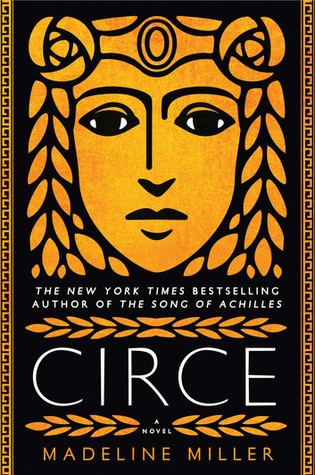
Circe
Madeline Miller (2018)
“The 'witch' of The Odyssey finally speaks — and her story turns out to be about what it costs to become yourself.”
Why This Book Matters
Circe spent more than a year on the New York Times bestseller list and has sold millions of copies worldwide. It represents the mainstreaming of feminist mythological retelling as a literary form — not a niche academic project but a genuine commercial and critical phenomenon. The novel showed that there is a vast readership for stories that ask who the peripheral women of famous narratives actually were.
Firsts & Innovations
One of the first popular literary novels to give Circe a full interiority rather than defining her entirely by her relationship to Odysseus
Established the commercial viability of feminist classical retellings as a mainstream literary category
Demonstrated that the 'accessible but serious' register — neither academic nor beach-read — could sustain a mythological retelling at literary level
Cultural Impact
Spawned a wave of similar retellings: Miller's success accelerated publication of Barker's Silence of the Girls, Haynes's A Thousand Ships, and dozens of others
Introduced Homeric mythology to a generation of readers who had not encountered it in school
Made Circe a feminist icon rather than a mythological villain — the rebranding is now so complete that the original Odyssey reading feels incomplete without it
Widely assigned in high school AP English and college literature courses alongside the Odyssey itself
The 'Circe approach' — giving voice to the silenced peripheral woman — became a template for an entire publishing category
Banned & Challenged
Not commonly banned, though occasionally challenged in secondary school settings for scenes depicting sexual violence and for 'positive' portrayals of witchcraft and paganism.