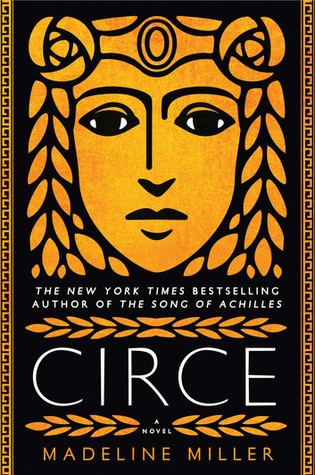
Circe
Madeline Miller (2018)
“The 'witch' of The Odyssey finally speaks — and her story turns out to be about what it costs to become yourself.”
Essay Questions & Food for Thought
30questions designed to challenge assumptions and provoke original thinking. These can't be answered from a summary — you need the actual text.
Miller opens with 'When I was born, the name for what I was did not exist.' Why is language — the absence of a word — Circe's first problem? What does naming have to do with power?
Circe's transformation of Scylla is the act that exiles her — and the act that defines her in mythology for centuries. Is it a villainous act? Use the novel's own ethical framework to evaluate it.
The novel presents pharmaka as labor — something learned through failure, practice, and attention — rather than as an innate gift. Why does this distinction matter for the novel's argument about power and gender?
How does the novel use the relationship between Circe and Penelope to challenge the 'good woman vs. bad woman' binary that the original mythology imposed on both of them?
Odysseus is the most famous hero of Greek mythology, and in this novel he is... thoroughly human. How does Miller characterize him, and what does her characterization argue about the nature of heroism?
Circe's exile to Aiaia is intended as punishment. In what ways does it function as liberation instead? What does the novel suggest about the relationship between exile and self-making?
The sailors who assault Circe become, in retellings, the evidence that she is a predator who hunts men. How does Miller's version of the event function as a critique of how women's self-defense gets narrativized?
Daedalus is the only character in the novel whose power is purely craft-based, like Circe's. What is the significance of their kinship, and what does Icarus's death add to the novel's meditation on made things and their risks?
Medea appears for only a few chapters, but she is described as a version of what Circe might have been. What is the crucial difference between them, and what does that difference argue about how we become who we are?
Miller gives Circe the experience of motherhood with Telegonus. How does becoming a mother change Circe's relationship to power, to isolation, and to mortality?
The prophecy that Telegonus will kill Odysseus is fulfilled, but not through any malicious intent. What does this use of prophecy argue about fate, agency, and the possibility of preventing what is already written?
Circe's final act is to transform herself into a mortal. Is this a triumph, a defeat, or something more complex? What does she gain and what does she give up?
Hermes visits Circe repeatedly across centuries and is more genuinely kind to her than any other god. Is he trustworthy? What does his particular relationship to Circe reveal about the limits of divine 'friendship'?
The novel has been described as a feminist retelling. But Circe eventually makes a choice that some readers see as traditional — she becomes mortal for a man. Is this a feminist ending? Does the question even work?
Compare how Miller treats transformation — physical change through pharmaka — as a metaphor for internal change. Is every transformation in the novel also psychological? Are there transformations that are only physical?
The gods in this novel are essentially unchanging. What does their unchangeability reveal about what Miller values — and why is a god who can't be transformed by experience the novel's most implicit critique?
Circe has been alone for centuries at various points in the novel. How does Miller differentiate between loneliness (a wound) and solitude (a practice)? Does Circe ever make peace with being alone?
The novel is full of women who are defined by famous men: Circe by Odysseus, Penelope by Odysseus, Medea by Jason, Pasiphae by Minos and Poseidon. How does Miller resist this structure while writing within it?
Telemachus and Odysseus are father and son, but they are written as near-opposites in temperament. What does each represent, and what does Circe's different relationship to each tell us about what she has become by the novel's end?
The novel spans centuries but is written in a consistent narrative voice. How does Miller manage Circe's sense of time — as an immortal who experiences time differently — without making the novel feel shapeless or disconnected?
Craft — the making of things through effort — is one of the novel's highest values. Identify three instances of craft in the novel (not only Circe's pharmaka) and analyze what they have in common.
The Odyssey is one of the foundational texts of Western literature — but Circe appears in it mainly as an obstacle Odysseus overcomes. What is lost when we tell stories only from the hero's perspective, and what does Miller's retelling restore?
Penelope says something like: she had been clever her whole life, and cleverness had kept her in a cage. How does the novel treat intelligence as a gendered experience — useful but constrained by the structures that require you to conceal it?
The novel never explains exactly how pharmaka works — it is described experientially, not mechanically. Why does Miller withhold the systematic explanation, and what does that choice argue about the nature of craft knowledge?
Circe is guilty of real harm — Scylla's transformation will kill sailors for generations. How does the novel hold Circe accountable for this while still centering her as a sympathetic protagonist? Is this narrative balance achieved?
This is a novel about a woman who eventually discovers that the story told about her — the dangerous witch — was always wrong. How do stories about dangerous women function in our own cultural moment? Who benefits from those stories?
In Greek tragedy, fate is inescapable. In this novel, Circe makes a choice at the end that feels genuinely free. Has Miller written a tragedy, a comedy (in the classical sense — ending in marriage/union), or something else entirely?
How would Circe be different if it were written from a third-person perspective instead of Circe's first-person? What is gained by inhabiting her consciousness — and what might an external view see that she can't?
The novel has no villain in the traditional sense — even the gods are not exactly evil, just indifferent. How does Miller create dramatic tension and moral weight without a clear antagonist?
Read the final page of Circe. How does Miller's closing prose — in register, rhythm, and image — complete the arc of Circe's voice across the novel? What has changed in how she speaks, and what does the change tell you about who she is now?