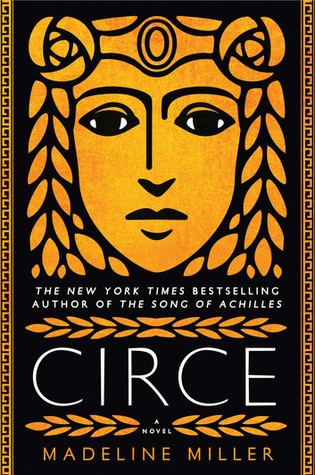
Circe
Madeline Miller (2018)
“The 'witch' of The Odyssey finally speaks — and her story turns out to be about what it costs to become yourself.”
Circe— Historical Context & Author Background
Author: Madeline Miller · Published 2018· Era: Contemporary / Mythic Retelling·393 pages
Themes explored: power, gender, transformation, isolation, motherhood, identity, immortality, craft
About Madeline Miller
Madeline Miller (born 1978) studied Classics at Brown University and has a master's degree in the field. She taught Latin and Greek for years before her first novel, The Song of Achilles (2011), won the Orange Prize for Fiction. Circe (2018) became an even larger commercial success, spending years on the New York Times bestseller list. Miller has described her relationship to the source material as one of love, not expertise — she came to these stories as a reader who was moved by them, and her retellings are driven by the questions the originals didn't ask: what were these peripheral women actually experiencing?
Life → Text Connections
How Madeline Miller's real experiences shaped specific elements of Circe.
Years of teaching Latin and Greek to secondary students
The novel's commitment to making the ancient world accessible without dumbing it down — the research is deep, but the prose never requires a classical education to follow
Miller writes for the reader who came to the Odyssey in high school and found Circe confusing or scary. She's teaching by reimagining.
The Orange Prize win for The Song of Achilles opened the door to Circe — she was now a credentialed literary figure, not just a fan
Circe is formally more ambitious than The Song of Achilles — more interior, more willing to take its time — as if Miller trusted her own voice more
The craft of the second novel benefits from the confidence the first success allowed.
Miller has spoken about writing Circe during the years when conversations about women's voices, women's power, and women's silence were reshaping public discourse
The novel is saturated with feminist consciousness without being didactic — the politics live in character and situation, not in speechifying
The cultural moment gave Miller a readership primed to receive what the novel was doing. The novel gave that readership a myth to think with.
Historical Era
Ancient Greek mythology — primarily Homeric period, set in the same narrative world as the Iliad and Odyssey; published 2018
How the Era Shapes the Book
Circe was published into a cultural moment specifically receptive to its project: the question 'what was she actually experiencing?' applied to a mythological figure who had been famous for centuries as a threat, a villain, a cautionary symbol. The novel didn't create that question, but it arrived when the question was everywhere. The 2018 context also shapes how readers receive the assault scenes, the treatment of women's power as threatening to patriarchal structures, and Circe's radical final choice — all of which resonated with a readership that had been thinking hard about exactly these dynamics.
Why Circe Matters Historically
Circe spent more than a year on the New York Times bestseller list and has sold millions of copies worldwide. It represents the mainstreaming of feminist mythological retelling as a literary form — not a niche academic project but a genuine commercial and critical phenomenon. The novel showed that there is a vast readership for stories that ask who the peripheral women of famous narratives actually were.
- One of the first popular literary novels to give Circe a full interiority rather than defining her entirely by her relationship to Odysseus
- Established the commercial viability of feminist classical retellings as a mainstream literary category
- Demonstrated that the 'accessible but serious' register — neither academic nor beach-read — could sustain a mythological retelling at literary level
Not commonly banned, though occasionally challenged in secondary school settings for scenes depicting sexual violence and for 'positive' portrayals of witchcraft and paganism.