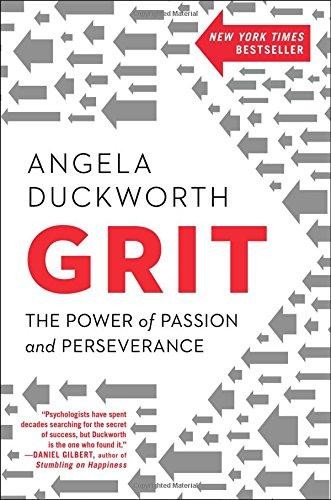
Grit: The Power of Passion and Perseverance
Angela Duckworth (2016)
“A psychologist who studied West Point cadets, National Spelling Bee champions, and rookie teachers in tough neighborhoods discovers that the secret to outstanding achievement is not talent but a special blend of passion and persistence she calls 'grit.'”
This page prints on a single page. Use Ctrl+P / Cmd+P.
Grit: The Power of Passion and Perseverance
Angela Duckworth (2016) · 352pages · Contemporary Nonfiction
Summary
Angela Duckworth argues that the secret ingredient of outstanding achievement is not talent, IQ, or luck, but a combination of sustained passion and perseverance she calls 'grit.' Drawing on research with West Point cadets, National Spelling Bee contestants, corporate salespeople, and Chicago public school students, she demonstrates that grit predicts success more reliably than talent or intelligence, and she provides a framework — built on interest, practice, purpose, and hope — for developing grit in yourself and others.
Why It Matters
Grit introduced a measurable construct — the combination of passion and perseverance — that reframed the conversation about achievement from talent identification to effort cultivation. The concept has been adopted by schools, military programs, athletic organizations, and corporations worldwide,...
Themes & Motifs
Diction & Style
Register: Moderately informal. Duckworth uses first-person narrative extensively, shares personal anecdotes, and addresses the reader conversationally. But she maintains scientific rigor through precise citation of research, careful distinction between correlation and causation, and honest acknowledgment of her framework's limitations. The informality creates rapport; the rigor creates trust.
Narrator: Candid researcher — Duckworth writes with the confidence of someone who has done the work and the humility of someone...
Figurative Language: Moderate. Duckworth uses metaphors strategically
Historical Context
The character education and positive psychology movement (2010s): Grit was published at a moment when educators, parents, and policymakers were intensely interested in 'non-cognitive skills' — the character traits, habits of mind, and motivational patterns that s...
Key Characters
Talking Points
- Duckworth's effort equation states that Talent x Effort = Skill, and Skill x Effort = Achievement. Why does effort count twice? What are the implications of this formulation for how we think about talent?
- What is the difference between grit and stubbornness? How does Duckworth distinguish productive persistence from inflexible refusal to change course?
- Duckworth argues that passion develops gradually through exploration, not through a sudden 'eureka' moment. How does this view of passion challenge common advice to 'follow your passion'?
- How does Duckworth's concept of 'deliberate practice' differ from simply working hard or putting in hours? Why is the distinction important?
- Evaluate the 'Hard Thing Rule' as a parenting strategy. What are its strengths and potential drawbacks? Would it work for all families?
Notable Quotes
“Our potential is one thing. What we do with it is quite another.”
“Enthusiasm is common. Endurance is rare.”
“Passion for your work is a little bit of discovery, followed by a lot of development, and then a lifetime of deepening.”
Why Read This
Grit provides a research-backed answer to one of the most important questions you face: what determines whether you will succeed at the things that matter to you? The answer — sustained passion and perseverance, not innate talent — is both challen...