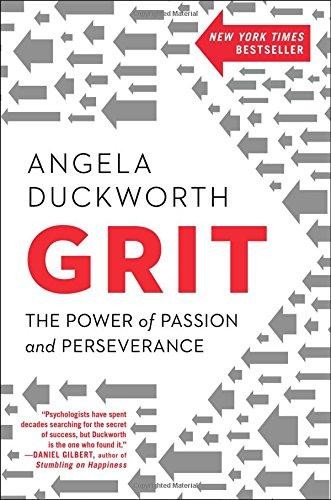
Grit: The Power of Passion and Perseverance
Angela Duckworth (2016)
“A psychologist who studied West Point cadets, National Spelling Bee champions, and rookie teachers in tough neighborhoods discovers that the secret to outstanding achievement is not talent but a special blend of passion and persistence she calls 'grit.'”
Grit: The Power of Passion and Perseverance— Literary & Historical Significance
Why This Book Matters
Grit introduced a measurable construct — the combination of passion and perseverance — that reframed the conversation about achievement from talent identification to effort cultivation. The concept has been adopted by schools, military programs, athletic organizations, and corporations worldwide, and has become one of the most discussed and debated ideas in contemporary psychology.
Firsts & Innovations
Developed the Grit Scale — a validated self-report measure of passion and perseverance that has been administered to millions
Demonstrated through controlled research that grit predicts achievement beyond what IQ, talent, and standardized test scores predict
Formalized the effort equation (Talent x Effort = Skill; Skill x Effort = Achievement) as a concise challenge to the talent myth
Connected disparate research traditions — deliberate practice, growth mindset, learned optimism — into a unified framework for understanding sustained achievement
Cultural Impact
The word 'grit' entered the popular vocabulary as a specific psychological construct, not just a colloquial term for toughness
Adopted by KIPP charter schools, West Point, and the Seattle Seahawks as an explicit organizational value
Influenced hiring and evaluation practices at companies seeking to assess candidates' perseverance alongside their skills
Sparked a significant academic and cultural debate about the relative importance of individual character versus structural conditions
Duckworth's TED Talk became one of the most-viewed in TED history, introducing the concept to a global audience
Generated important critiques about the limits of individual-level explanations for systemic inequalities
Banned & Challenged
Not banned, but the subject of significant controversy. Critics from education, sociology, and psychology have raised concerns about: the framework's potential to blame individuals for systemic failures (telling a student in a failing school to 'be grittier' rather than fixing the school); the Grit Scale's overlap with existing personality measures (particularly the Big Five trait of conscientiousness); replication difficulties with some foundational studies; and the ethics of measuring and evaluating grit in students, particularly those from disadvantaged backgrounds.