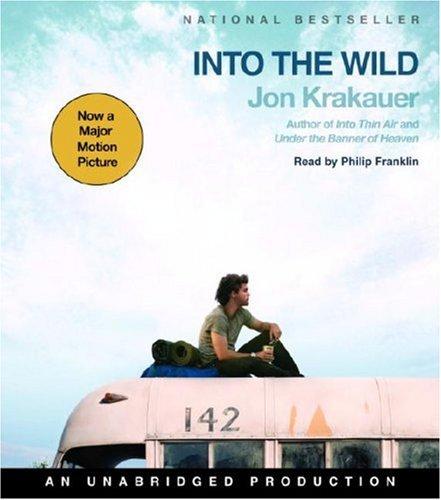
Into the Wild
Jon Krakauer (1996)
“A young man walked away from everything America told him to want — and died for it. Jon Krakauer can't stop thinking about why.”
This page prints on a single page. Use Ctrl+P / Cmd+P.
Into the Wild
Jon Krakauer (1996) · 224pages · Contemporary Nonfiction · 4 AP appearances
Summary
In April 1992, twenty-four-year-old Christopher McCandless hitchhiked into the Alaskan wilderness with a ten-pound bag of rice and a .22 caliber rifle. Four months later, a moose hunter found his decomposed body in an abandoned bus. Jon Krakauer — himself a former young man who courted death in the mountains — pieces together McCandless's journey and argues that his idealism, however reckless, deserves to be understood rather than dismissed.
Why It Matters
Into the Wild spent two years on the New York Times bestseller list after publication and has never gone out of print. It transformed a coroner's report into one of the most debated questions in American culture: was McCandless a hero or a fool? The debate — conducted in classrooms, online, and i...
Themes & Motifs
Diction & Style
Register: Clear, precise, accessible — investigative journalism raised to literary standard. Krakauer's own voice is measured; McCandless's voice (in letters and journal excerpts) is romantic and declamatory.
Narrator: Krakauer: a journalist who became personally invested. The book is nominally a magazine piece expanded — but the expa...
Figurative Language: Moderate
Historical Context
Early 1990s — post-Cold War America, late-stage consumer culture, environmental awakening: McCandless graduated into an America of material abundance and political exhaustion. The Cold War was over; there were no great causes. He rejected the path his parents' generation had built — stab...
Key Characters
Talking Points
- Krakauer is openly sympathetic to McCandless throughout the book. Does this make him more or less trustworthy as a narrator? Can a journalist advocate for a subject and still report accurately?
- McCandless's final journal entry may have been 'HAPPINESS ONLY REAL WHEN SHARED.' If true, does this represent a conversion from his philosophy, or its completion? Did he change his mind at the end?
- The book is non-chronological — we know McCandless dies before we know how he lived. How does this structure shape your response to him? Would the book be more or less sympathetic told chronologically?
- Every person McCandless met found him charismatic and worrying in equal measure. What does this tell us about charisma? Is it possible to be genuinely charming and genuinely irresponsible simultaneously?
- McCandless donated his $24,000 savings to OXFAM and burned his remaining cash. Is this admirable, irresponsible, or both? What does money represent to him, and what is he trying to destroy when he destroys it?
Notable Quotes
“He said the only tool he'd bring was a .22-caliber rifle for shooting game. He wasn't expecting to see another person for at least two or three mon...”
“There was just something about the kid that made Gallien want to help.”
“S.O.S. I need your help. I am injured, near death, and too weak to hike out of here.”
Why Read This
Because the question the book asks — what is a life well-lived, and how much risk does the answer permit? — is the question you will be answering for the next twenty years. McCandless got it wrong in the specific but may have gotten it right in th...