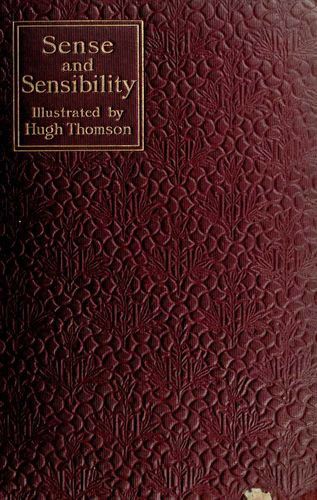
Sense and Sensibility
Jane Austen (1811)
“Two sisters, one heart of sense, one of sensibility — and Austen wants you to question which is worse.”
Sense and Sensibility— Summary & Analysis
by Jane Austen · published 1811 · 409 pages · Romantic / Regency
A user-friendly study guide for Sense and Sensibility by Jane Austen (1811): a high-level plot summary, full chapter-by-chapter analysis, theme breakdowns, character profiles, and 30 essay questions designed for ap-english, college, ib readers. Unlike a stock summary, sumsumsum.com adds a diction analysis drawn from Jane Austen’s actual text, the 8 documented AP Literature exam appearances of this book, and reading-difficulty guidance (Easy, 3/10) so students, teachers, and lifelong readers know what they are walking into.
“Two sisters, one heart of sense, one of sensibility — and Austen wants you to question which is worse.”
Short Summary
After their father dies and leaves the family estate to a half-brother, the Dashwood women — Elinor, Marianne, and their mother — are forced from Norland Park to a modest cottage in Devonshire. Elinor falls quietly in love with Edward Ferrars while hiding her feelings with admirable restraint. Marianne falls passionately in love with the charming John Willoughby, who abandons her to marry money. Both sisters are devastated. Edward turns out to have been secretly engaged to the mercenary Lucy Steele for four years; Willoughby turns out to be a seducer who ruined a young girl. The novel ends with Elinor marrying Edward and Marianne eventually — after nearly dying from heartbreak — marrying the steady Colonel Brandon.
Detailed Summary
When Mr. Henry Dashwood dies, English inheritance law sends everything to his son from his first marriage, John Dashwood, whose cold and calculating wife Fanny convinces him to reduce the promised provision for the Dashwood women to almost nothing. Mrs. Dashwood and her three daughters — Elinor, Mar...
Summary in the Author’s Writing Style
A retelling of Sense and Sensibility in Jane Austen’s style — so you can hear the language, not just the plot. This is a stylistic pastiche written by sumsumsum, not an excerpt from the book.
When Mr. Henry Dashwood died, the law, which is seldom so accommodating to widows as to sons, conveyed Norland Park entire to John Dashwood; and Mrs. John Dashwood, who could persuade her husband of anything provided it cost him nothing, persuaded him that a generous provision for his stepmother and…
Chapter-by-Chapter Analysis
If you liked Sense and Sensibility, read next
Start with The Age of Innocence by Edith Wharton — The American version of Austen's project — social constraint destroying private feeling, written a century later with the added weight of knowing how it ends.
For comparative essays, pair Sense and Sensibility with
The strongest comparative pairing is Middlemarch (George Eliot) — The full-scale Victorian expansion of everything Austen compresses — Dorothea Brooke is what Marianne might have become in a world that took her seriously. For a third angle, contrast with North and South (Elizabeth Gaskell) — A Victorian novel explicitly in Austen's mode, updating the sense/sensibility argument into an industrial era and giving the heroine economic agency Austen's women never had.
Each of these pairings opens a clean thesis path on shared themes, period diction, or formal influence — useful for AP Lit / IB / first-year college comparative essays.
More from Jane Austen and the scholars who study Austen
Other works by Jane Austen: Emma (1815, 474 pages), Mansfield Park (1814, 483 pages), Northanger Abbey (1817, 260 pages), Persuasion (1817, 249 pages). Reading two or three of these in sequence reveals Jane Austen’s recurring obsessions and stylistic signatures more clearly than any single book can.
The standard scholarly entry points to Jane Austen’s work: Claudia L. Johnson (Princeton, Murray Professor of English) — Jane Austen: Women, Politics, and the Novel (1988); Mary Lascelles (Oxford, Somerville College) — Jane Austen and Her Art (1939); Lionel Trilling (Columbia, Trilling lectures on Austen) — The Opposing Self (1955). These are the works graduate seminars cite when teaching Jane Austen.