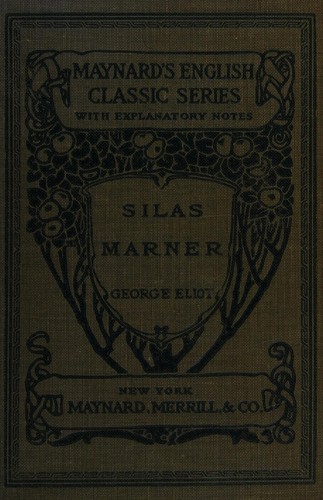
Silas Marner
George Eliot (Mary Ann Evans) (1861)
“A miser's stolen gold is replaced by a golden-haired orphan, and a community becomes the instrument of moral reckoning.”
At a Glance
Silas Marner, a weaver falsely accused of theft by his religious community in Lantern Yard, retreats to the rural village of Raveloe, where he lives as a recluse for fifteen years, hoarding gold coins as his only source of meaning. When the squire's dissolute younger son Dunstan Cass steals Silas's gold and vanishes, the weaver is shattered. On New Year's Eve, a golden-haired toddler wanders into his cottage after her opium-addicted mother dies in the snow. Silas adopts the child, names her Eppie, and through raising her is reintegrated into the Raveloe community. Sixteen years later, Eppie's biological father Godfrey Cass — who had secretly married her mother — tries to claim her. Eppie refuses, choosing Silas and the working-class life she knows. Justice arrives not through courts but through communal moral order.
Read full summary →Why This Book Matters
One of the shortest and most widely assigned Victorian novels, Silas Marner demonstrated that the moral complexity of Eliot's longer works could be achieved in a compressed, fable-like structure. It remains a cornerstone of British secondary education and a standard text in courses on Victorian literature, the English novel, and moral philosophy in fiction.
Diction Profile
Elevated Victorian prose with extensive authorial commentary, balanced by precisely rendered dialect speech in dialogue
Moderate