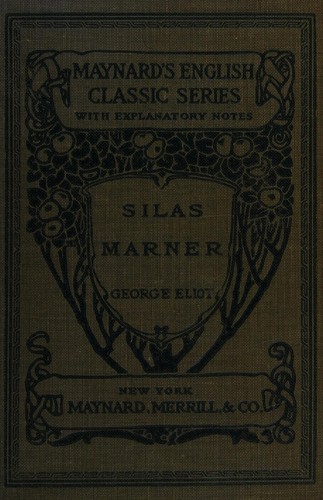
Silas Marner
George Eliot (Mary Ann Evans) (1861)
“A miser's stolen gold is replaced by a golden-haired orphan, and a community becomes the instrument of moral reckoning.”
Silas Marner— Summary & Analysis
by George Eliot (Mary Ann Evans) · published 1861 · 224 pages · Victorian Realism
A user-friendly study guide for Silas Marner by George Eliot (Mary Ann Evans) (1861): a high-level plot summary, full chapter-by-chapter analysis, theme breakdowns, character profiles, and 30 essay questions designed for high-school, ap-english, college readers. Unlike a stock summary, sumsumsum.com adds a diction analysis drawn from George Eliot (Mary Ann Evans)’s actual text, the 3 documented AP Literature exam appearances of this book, and reading-difficulty guidance (Easy, 3/10) so students, teachers, and lifelong readers know what they are walking into.
“A miser's stolen gold is replaced by a golden-haired orphan, and a community becomes the instrument of moral reckoning.”
Short Summary
Silas Marner, a weaver falsely accused of theft by his religious community in Lantern Yard, retreats to the rural village of Raveloe, where he lives as a recluse for fifteen years, hoarding gold coins as his only source of meaning. When the squire's dissolute younger son Dunstan Cass steals Silas's gold and vanishes, the weaver is shattered. On New Year's Eve, a golden-haired toddler wanders into his cottage after her opium-addicted mother dies in the snow. Silas adopts the child, names her Eppie, and through raising her is reintegrated into the Raveloe community. Sixteen years later, Eppie's biological father Godfrey Cass — who had secretly married her mother — tries to claim her. Eppie refuses, choosing Silas and the working-class life she knows. Justice arrives not through courts but through communal moral order.
Detailed Summary
Silas Marner is a skilled linen-weaver living among a strict Calvinist sect in the industrial town of Lantern Yard. He is devout, trusting, and engaged to a woman named Sarah. His closest friend, William Dane, frames him for the theft of a dying deacon's money by planting Silas's knife at the scene....
Summary in the Author’s Writing Style
A retelling of Silas Marner in George Eliot (Mary Ann Evans)’s style — so you can hear the language, not just the plot. This is a stylistic pastiche written by sumsumsum, not an excerpt from the book.
In the days when the spinning-wheels hummed busily in the farmhouses, there lived in the cramped streets of Lantern Yard a weaver named Silas Marner, a man whose faith was as plain and unquestioning as the linen he wove. He trusted his God, he trusted the brethren of his narrow chapel, and above all…
Chapter-by-Chapter Analysis
If you liked Silas Marner, read next
Start with Middlemarch by George Eliot — Eliot's masterpiece expands the same themes — community as moral ecosystem, the consequences of self-deception, provincial life as microcosm — across a much larger canvas. Or pivot to Jane Eyre by Charlotte Bronte — Another novel about an outsider who must choose between wealth and moral integrity — though Bronte gives her heroine both, where Eliot insists the choice is real.
For comparative essays, pair Silas Marner with
The strongest comparative pairing is Great Expectations (Charles Dickens) — Another Victorian novel about class, secret benefactors, and the moral education of an outsider — Dickens is more theatrical, Eliot more analytical, but both interrogate what 'getting ahead' costs. Another productive pairing is Tess of the d'Urbervilles (Thomas Hardy) — Hardy's darker answer to Eliot's question about whether community can redeem the individual — in Hardy's world, it cannot, and the innocent are crushed. For a third angle, contrast with Les Miserables (Victor Hugo) — Jean Valjean's redemption through Cosette parallels Silas's through Eppie — a broken man saved by caring for a child, with class injustice as the backdrop.
Each of these pairings opens a clean thesis path on shared themes, period diction, or formal influence — useful for AP Lit / IB / first-year college comparative essays.