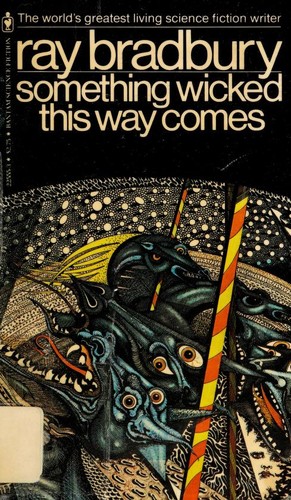
Something Wicked This Way Comes
Ray Bradbury (1962)
“A traveling carnival offers you everything you ever wanted — your youth back, your secret desires fulfilled — and it only costs your soul.”
Why This Book Matters
Something Wicked This Way Comes is the foundational text of American dark fantasy — the book that proved literary horror could be lyrical, philosophical, and emotionally generous. Before Bradbury, horror in American fiction was either pulp (entertaining but disposable) or Gothic (Poe, Hawthorne — brilliant but psychologically narrow). Bradbury created a third path: horror as a vehicle for exploring what it means to be human, mortal, and afraid. The novel's influence on Stephen King, Neil Gaiman, and virtually every subsequent writer of literary horror is direct and acknowledged.
Firsts & Innovations
One of the first American novels to treat horror and fantasy with the literary seriousness previously reserved for 'realist' fiction
Pioneered the 'small-town menace' subgenre that Stephen King would later make his own
One of the earliest novels to make a middle-aged, physically unremarkable man the hero of a fantasy — predating the 'ordinary hero' trope by decades
Cultural Impact
Adapted into a 1983 Disney film (screenplay by Bradbury himself), introducing the story to a new generation
Stephen King has cited it as the single most important influence on his work, calling it 'the best book of its type'
Neil Gaiman's work — particularly The Ocean at the End of the Lane and Coraline — is a direct descendant
The phrase 'something wicked this way comes' (from Macbeth) re-entered popular culture primarily through this novel
Established the traveling carnival as a permanent fixture of American horror iconography
The novel's thesis — that joy defeats evil — has been adopted by therapists, educators, and self-help writers, often without attribution
Banned & Challenged
Occasionally challenged in school libraries for its depiction of witchcraft, occult themes, and what some parents have called 'demonic imagery.' The irony is considerable — the novel's explicit moral is that love, laughter, and family togetherness are the only forces that can defeat darkness.