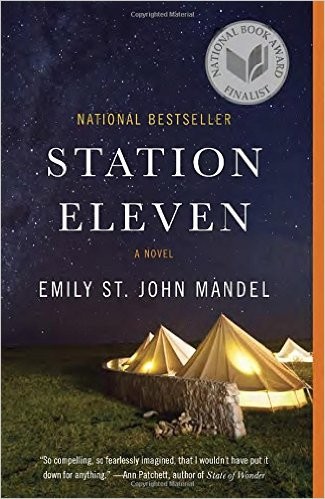
Station Eleven
Emily St. John Mandel (2014)
“After a pandemic kills most of humanity, a traveling Shakespeare troupe moves through the ruins — because 'survival is insufficient.'”
At a Glance
The Georgia Flu kills 99% of humanity in weeks. Twenty years later, the Traveling Symphony — a troupe of actors and musicians — moves between the settlements of the Great Lakes performing Shakespeare and music. Their motto, borrowed from Star Trek: 'survival is insufficient.' The novel weaves between the pre-collapse world of actor Arthur Leander, his dying night on a Toronto stage, and the post-collapse lives of the people connected to him — a child actress named Kirsten, his best friend Clark, his ex-wives, and a prophet who becomes a deadly threat.
Read full summary →Why This Book Matters
Station Eleven revitalized post-apocalyptic fiction as a literary genre — demonstrating that science fiction's speculative frame could carry the same emotional and moral weight as literary fiction. It won the Arthur C. Clarke Award and was a finalist for the National Book Award, an unusual double recognition. The COVID-19 pandemic transformed the novel from culturally resonant to uncannily prophetic, bringing it to millions of new readers. The HBO Max television adaptation (2021-22) introduced it to a generation who encountered it during the very conditions it imagined.
Diction Profile
Literary with journalistic precision — lyrical without excess, restrained without coldness
Moderate