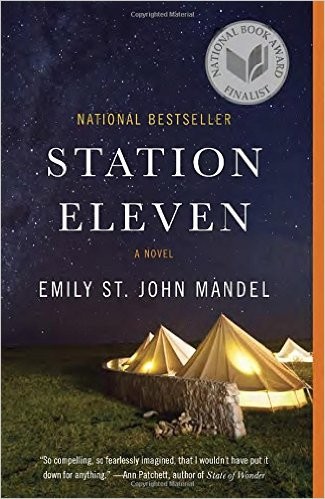
Station Eleven
Emily St. John Mandel (2014)
“After a pandemic kills most of humanity, a traveling Shakespeare troupe moves through the ruins — because 'survival is insufficient.'”
Station Eleven— Summary & Analysis
by Emily St. John Mandel · published 2014 · 333 pages · Contemporary
A user-friendly study guide for Station Eleven by Emily St. John Mandel (2014): a high-level plot summary, full chapter-by-chapter analysis, theme breakdowns, character profiles, and 30 essay questions designed for high-school, ap-english, college readers. Unlike a stock summary, sumsumsum.com adds a diction analysis drawn from Emily St. John Mandel’s actual text, the 3 documented AP Literature exam appearances of this book, and reading-difficulty guidance (Easy, 2/10) so students, teachers, and lifelong readers know what they are walking into.
“After a pandemic kills most of humanity, a traveling Shakespeare troupe moves through the ruins — because 'survival is insufficient.'”
Short Summary
The Georgia Flu kills 99% of humanity in weeks. Twenty years later, the Traveling Symphony — a troupe of actors and musicians — moves between the settlements of the Great Lakes performing Shakespeare and music. Their motto, borrowed from Star Trek: 'survival is insufficient.' The novel weaves between the pre-collapse world of actor Arthur Leander, his dying night on a Toronto stage, and the post-collapse lives of the people connected to him — a child actress named Kirsten, his best friend Clark, his ex-wives, and a prophet who becomes a deadly threat.
Detailed Summary
The novel opens on the night of the collapse. Arthur Leander, a famous actor, suffers a heart attack on a Toronto stage while playing King Lear. A paramedic trainee named Jeevan rushes up from the audience to perform CPR. A child actress named Kirsten Raymonde watches, confused, from the wings. Arth...
Summary in the Author’s Writing Style
A retelling of Station Eleven in Emily St. John Mandel’s style — so you can hear the language, not just the plot. This is a stylistic pastiche written by sumsumsum, not an excerpt from the book.
The actor died onstage on a Wednesday night in Toronto, in the fourth act, with a cardboard crown sliding off his head. His name was Arthur Leander and he was playing Lear, and a young man named Jeevan came up out of the dark of the audience and knelt over him and pressed his hands to the famous che…
Chapter-by-Chapter Analysis
If you liked Station Eleven, read next
Start with The Road by Cormac McCarthy — The other great literary post-apocalyptic novel — where McCarthy strips language and hope bare, Mandel makes both lyrical; together they define the genre's range. Then try The Handmaid's Tale by Margaret Atwood — Post-collapse civilization built on ideology and control — Atwood's future is darker and more totalitarian, but both novels ask what humans do with the ruins of the world they knew. Or pivot to Slaughterhouse-Five by Kurt Vonnegut — Non-linear structure used to process catastrophe; both novels refuse conventional dramatic arcs in favor of something more honest about how trauma moves through time.
For comparative essays, pair Station Eleven with
The strongest comparative pairing is Never Let Me Go (Kazuo Ishiguro) — Same elegiac mode, same technique of withholding and revealing, same question about what art means in a world that treats certain lives as expendable.
Each of these pairings opens a clean thesis path on shared themes, period diction, or formal influence — useful for AP Lit / IB / first-year college comparative essays.