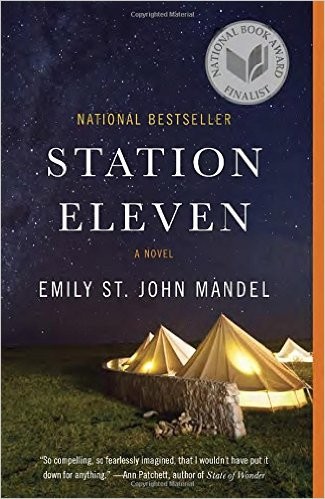
Station Eleven
Emily St. John Mandel (2014)
“After a pandemic kills most of humanity, a traveling Shakespeare troupe moves through the ruins — because 'survival is insufficient.'”
Why This Book Matters
Station Eleven revitalized post-apocalyptic fiction as a literary genre — demonstrating that science fiction's speculative frame could carry the same emotional and moral weight as literary fiction. It won the Arthur C. Clarke Award and was a finalist for the National Book Award, an unusual double recognition. The COVID-19 pandemic transformed the novel from culturally resonant to uncannily prophetic, bringing it to millions of new readers. The HBO Max television adaptation (2021-22) introduced it to a generation who encountered it during the very conditions it imagined.
Firsts & Innovations
One of the first post-apocalyptic novels to focus almost entirely on what comes after the crisis rather than the crisis itself
Pioneered the use of a graphic novel as a structural metaphor within literary fiction — the comic as thematic double
Demonstrated that science fiction's speculative premise could carry literary fiction's full emotional and moral range for mainstream audiences
Cultural Impact
The HBO Max adaptation (2021) aired during the COVID-19 pandemic, creating an unprecedented experience of reading and watching a pandemic novel during a pandemic
The phrase 'survival is insufficient' entered cultural circulation as a framework for thinking about art's role in crisis
Reshaped how educators teach post-apocalyptic fiction — now regularly assigned as literary fiction, not science fiction
Miranda Carroll's graphic novel inspired real-world artists to create their own version of Station Eleven comics
The novel's non-linear structure has been widely cited as an influence by writers working in fragmented timelines
Banned & Challenged
Not widely banned, but occasionally challenged in school settings for adult content (Arthur's affairs, drug references) and for being 'too dark' — the irony being that Station Eleven is among the most hopeful post-apocalyptic novels ever written.