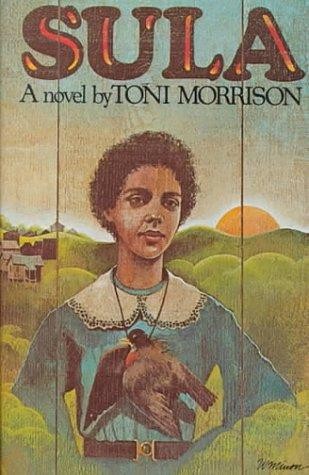
Sula
Toni Morrison (1973)
“A story about two Black women who need each other to exist — and what happens to a person when their opposite disappears.”
This page prints on a single page. Use Ctrl+P / Cmd+P.
Sula
Toni Morrison (1973) · 174pages · Contemporary · 7 AP appearances
Summary
In the Bottom, a Black hillside community above the Ohio town of Medallion, Nel Wright and Sula Peace grow up as inseparable doubles — one defined by belonging, the other by refusal. When they accidentally cause a child's death, their silence binds them. Sula leaves for a decade, becomes a scandal, and returns to die young. Nel, who believed herself the good one, discovers at the novel's end that she has been grieving Sula, not her husband, for twenty-five years.
Why It Matters
Sula was one of the first novels by a Black woman to treat Black female friendship — not romance, not family, but friendship between women — as the primary subject worthy of literary attention. Morrison refused the tradition of the novel's plot organizing around male characters or heterosexual lo...
Themes & Motifs
Diction & Style
Register: Formal narrative voice with deep roots in Black vernacular speech — Morrison moves between elevated prose poetry and the idiom of the Bottom without signaling the shift
Narrator: Morrison's narrator is omniscient but communal — it speaks with the authority of collective memory, of the Bottom's o...
Figurative Language: High
Historical Context
1919-1965 — Jim Crow North, Great Migration, WWII, Civil Rights era: The Bottom's history from 1919 to 1965 maps directly onto the trajectory of Black northern communities in the 20th century: World War I veterans returning shell-shocked to limited opportunity (Shad...
Key Characters
Talking Points
- Morrison never tells us which of her two protagonists is right — Nel or Sula. Is this a failure of moral clarity, or is it the novel's central argument? What would the novel lose if Morrison took a side?
- Eva tells Nel, 'You watched. You didn't do nothing, but you watched.' Is Eva right that watching and doing are morally equivalent? Apply Eva's logic to three other moments in the novel.
- Morrison argues that Sula's presence makes the Bottom a better community — people protect their families harder, are kinder to each other, against the designated evil in their midst. What does this suggest about the function of the outcast in a community?
- The Bottom was founded on a white man's lie and named through deception. By 1965, white people have bought it and turned it into a golf course. What is Morrison arguing about the permanence of Black community under American conditions?
- Nel's defining moment as a girl is her internal declaration: 'I am me. I'm not their daughter. I'm not Nel. I'm me.' By the end of the novel, has she kept that self? What happened to it?
Notable Quotes
“He spent his days, his tendril-soft days, walking up and down, up and down, within his powerful but limited world.”
“In the interests of his own sanity he began that January third, the dawning of National Suicide Day.”
“I'm me. I'm not their daughter. I'm not Nel. I'm me. Me.”
Why Read This
Because Morrison does something almost no other novelist does: she makes the community itself a character, and she refuses to tell you which of her two protagonists is right. You will leave the novel arguing — was Nel the good one? Was Sula? The c...