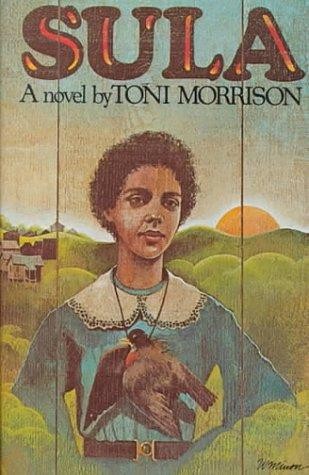
Sula
Toni Morrison (1973)
“A story about two Black women who need each other to exist — and what happens to a person when their opposite disappears.”
Essay Questions & Food for Thought
30questions designed to challenge assumptions and provoke original thinking. These can't be answered from a summary — you need the actual text.
Morrison never tells us which of her two protagonists is right — Nel or Sula. Is this a failure of moral clarity, or is it the novel's central argument? What would the novel lose if Morrison took a side?
Eva tells Nel, 'You watched. You didn't do nothing, but you watched.' Is Eva right that watching and doing are morally equivalent? Apply Eva's logic to three other moments in the novel.
Morrison argues that Sula's presence makes the Bottom a better community — people protect their families harder, are kinder to each other, against the designated evil in their midst. What does this suggest about the function of the outcast in a community?
The Bottom was founded on a white man's lie and named through deception. By 1965, white people have bought it and turned it into a golf course. What is Morrison arguing about the permanence of Black community under American conditions?
Nel's defining moment as a girl is her internal declaration: 'I am me. I'm not their daughter. I'm not Nel. I'm me.' By the end of the novel, has she kept that self? What happened to it?
Sula's birthmark is seen as a rosebud by Nel, as Hannah's ashes by the community, as a snake by Jude. What does the birthmark's meaning-shifting tell us about how identity is constructed in this novel?
Eva burns her son Plum to death and explains it as an act of love. Is Morrison asking us to accept this logic, challenge it, or hold both responses simultaneously?
Shadrack says only 'always' to Sula in 1922. She carries that word her whole life without understanding it, and understands it only as she dies. What does 'always' mean? How does its meaning change across the novel?
Nel's final recognition — that she has been grieving Sula, not Jude, for twenty-five years — is the novel's emotional climax. What does this say about the relationship between romantic love and friendship in the novel?
Morrison uses dates as chapter titles rather than names or plot summaries. Why? What does the datebook structure argue about how time works in this novel?
Ajax leaves when Sula starts to domesticate him — ironing his shirts, cleaning the house. Is Sula betraying her own philosophy, or is she simply human? Can anyone actually sustain the radical individualism she represents?
How does the Bottom respond differently to Sula's 'evil' than to the actual evils done to it — exclusion from jobs, economic marginalization, white appropriation of its land? What does this say about how communities direct their anger?
Morrison was writing Sula in the early 1970s, during second-wave feminism. But the novel doesn't fit neatly into feminist discourse — Sula's freedom is not advocacy, it's tragedy. How does Sula complicate feminist readings?
The Chicken Little drowning is ruled an accident by the community. Is it? Who bears moral responsibility, and does the novel ever assign it?
Morrison describes the Nel/Sula friendship as two girls 'creating something else to be' because all available selves were foreclosed to them. What selves were foreclosed, and what did they create instead?
The train scene with Helene and the white conductor is a masterclass in how racism operates in the North. How does it differ from Southern Jim Crow violence — and in some ways, how is it more psychologically damaging?
The Bottom disappears by 1965 — replaced by a golf course. If you set this novel in 2026, what would replace the Bottom? What contemporary process mirrors white appropriation of Black community space?
National Suicide Day begins as madness and ends as catastrophe. How does Morrison use Shadrack's ritual to structure the novel's arc? What does it mean that the community finally joins the parade in 1941?
Eva's act of burning Plum is described in detail; Hannah's death by fire is rendered in fragments. Both involve Eva and fire. Why does Morrison render these two deaths so differently?
Morrison's prose has been described as 'oral literature committed to the page' — it reads differently aloud than silently. Choose one passage and read it aloud. What does the sound of the language do that silent reading misses?
Compare Nel and Sula to another famous literary double: Jekyll and Hyde. What does Morrison's version of the double add that Stevenson's cannot — and vice versa?
Sula's last thought is to tell Nel what dying feels like. She has spent the novel unable to sustain connection — yet at death, she reaches for Nel. What does this suggest about the nature of her freedom?
Morrison refuses to explain what happened to Eva's leg, what exactly Sula saw when Hannah burned, or what Sula and Shadrack really communicated in 1922. Why does she leave these gaps?
The three Deweys — unrelated boys who merge into a single indistinguishable unit — are a comic figure in Eva's household. But their loss in the tunnel collapse is genuinely tragic. What work do they do thematically?
Compare Sula to Zora Neale Hurston's Janie Crawford in Their Eyes Were Watching God. Both are Black women pursuing selfhood in the face of community pressure. What does each novel conclude about whether that pursuit is possible?
The novel's dedicatory epigraph is from Tennessee Williams: 'Nobody knew my rose of the world but me... I had too much glory. They don't want glory like that in nobody's heart.' How does this apply to Sula specifically — and to Nel?
Morrison begins the novel with 'In the Time Before' — a section that reads like myth — before dating any chapter. Why does she frame the novel as myth before grounding it in specific dates?
Which character in Sula is most like a figure from Greek tragedy — who has a clear hamartia (fatal flaw) and whose destruction follows from it inevitably? Make the argument with textual evidence.
By 1965, the Civil Rights Act has passed. But the Bottom is gone, replaced by a golf course. What is Morrison saying about the relationship between legal progress and community survival?
If Sula had lived — if she had not gotten sick and died in 1940 — what would have happened to Nel? To the Bottom? Use the novel's logic to imagine an alternative history.