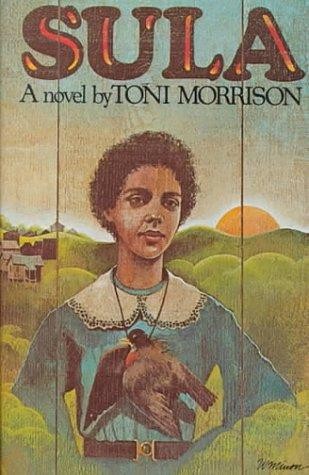
Sula
Toni Morrison (1973)
“A story about two Black women who need each other to exist — and what happens to a person when their opposite disappears.”
Sula— Summary & Analysis
by Toni Morrison · published 1973 · 174 pages · Contemporary
A user-friendly study guide for Sula by Toni Morrison (1973): a high-level plot summary, full chapter-by-chapter analysis, theme breakdowns, character profiles, and 30 essay questions designed for ap-english, college readers. Unlike a stock summary, sumsumsum.com adds a diction analysis drawn from Toni Morrison’s actual text, the 7 documented AP Literature exam appearances of this book, and reading-difficulty guidance (Easy, 3/10) so students, teachers, and lifelong readers know what they are walking into.
“A story about two Black women who need each other to exist — and what happens to a person when their opposite disappears.”
Short Summary
In the Bottom, a Black hillside community above the Ohio town of Medallion, Nel Wright and Sula Peace grow up as inseparable doubles — one defined by belonging, the other by refusal. When they accidentally cause a child's death, their silence binds them. Sula leaves for a decade, becomes a scandal, and returns to die young. Nel, who believed herself the good one, discovers at the novel's end that she has been grieving Sula, not her husband, for twenty-five years.
Detailed Summary
Toni Morrison's second novel is structured as a series of dated chapters spanning 1919 to 1965, framed by an introduction ('In the Time Before') and a coda. The setting is the Bottom — a Black hillside neighborhood in Medallion, Ohio, whose name derives from a white man's cruel joke: he told a freed...
Summary in the Author’s Writing Style
A retelling of Sula in Toni Morrison’s style — so you can hear the language, not just the plot. This is a stylistic pastiche written by sumsumsum, not an excerpt from the book.
In that place, where they tore the nightshade and blackberry patches from the hilltop to make room for a golf course, there was once a neighborhood. They called it the Bottom, though it stood high on the hill, because a white man, wanting his land but not his promise, told a freed slave that the roc…
Chapter-by-Chapter Analysis
If you liked Sula, read next
Start with Passing by Nella Larsen — Two women as philosophical doubles — Irene and Clare, like Nel and Sula, represent opposite life strategies for Black women, and the friendship ends in death.
For comparative essays, pair Sula with
The strongest comparative pairing is Their Eyes Were Watching God (Zora Neale Hurston) — Black female selfhood and community, vernacular precision, the woman who refuses to perform the self the community demands. For a third angle, contrast with Invisible Man (Ralph Ellison) — The Black community's projection of identity onto the individual — Ellison's protagonist is made invisible by this projection, Sula is made monstrous.
Each of these pairings opens a clean thesis path on shared themes, period diction, or formal influence — useful for AP Lit / IB / first-year college comparative essays.
More from Toni Morrison and the scholars who study Morrison
Other works by Toni Morrison: Beloved (1987, 324 pages), Song of Solomon (1977, 337 pages), The Bluest Eye (1970, 206 pages). Reading two or three of these in sequence reveals Toni Morrison’s recurring obsessions and stylistic signatures more clearly than any single book can.
The standard scholarly entry points to Toni Morrison’s work: Valerie Smith (Princeton, Woodrow Wilson School Dean) — Toni Morrison: Writing the Moral Imagination (2012); Andrea O'Reilly (York University, founder of Demeter Press) — Toni Morrison and Motherhood (2004). These are the works graduate seminars cite when teaching Toni Morrison.