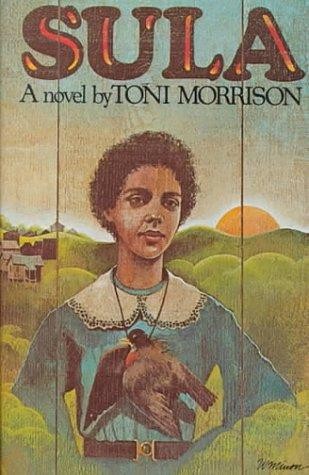
Sula
Toni Morrison (1973)
“A story about two Black women who need each other to exist — and what happens to a person when their opposite disappears.”
Why This Book Matters
Sula was one of the first novels by a Black woman to treat Black female friendship — not romance, not family, but friendship between women — as the primary subject worthy of literary attention. Morrison refused the tradition of the novel's plot organizing around male characters or heterosexual love. Nel and Sula's friendship IS the novel. This was, in 1973, a formal argument as much as a thematic one.
Firsts & Innovations
One of the first major American novels to center Black female friendship as the primary narrative relationship
First sustained literary treatment of the Black community as a full moral and philosophical world — not as background for white characters, not as victim, not as problem, but as a complete civilization with its own logic
Morrison's development of the communal narrator — the 'we' of the Bottom — that she will perfect in Beloved
Cultural Impact
Established Morrison as one of the essential American novelists a decade before Song of Solomon and Beloved
Permanently changed how Black women's friendship could be treated in literary fiction
The Nel/Sula double structure influenced an entire tradition of novels about female friendship as philosophical opposition
Required reading in most college-level American literature and African American literature courses
The Bottom as symbolic geography became a reference point in discussions of how literature encodes race into space
Banned & Challenged
Challenged in schools for explicit sexual content, including a scene of voyeurism in childhood and the frank portrayal of Hannah Peace's sexuality. Also challenged for 'nihilism' and for portraying a community without offering clear moral resolution.