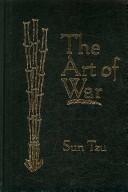
The Art of War
Sun Tzu (-500)
“The most influential military text ever written — a 2,500-year-old manual on winning without fighting that now runs boardrooms, locker rooms, and geopolitics.”
This page prints on a single page. Use Ctrl+P / Cmd+P.
The Art of War
Sun Tzu (-500) · 96pages · Ancient Chinese / Spring and Autumn Period · 2 AP appearances
Summary
Sun Tzu's The Art of War is a treatise on military strategy composed during China's Spring and Autumn period, organized into thirteen chapters covering topics from strategic planning and waging war to the use of spies and terrain. Its central argument is that supreme excellence lies not in winning every battle but in subduing the enemy without fighting — through deception, intelligence, adaptability, and the exploitation of weakness. The text transcends its military origins to offer a universal philosophy of conflict, competition, and leadership.
Why It Matters
The Art of War is the oldest known treatise on military strategy and the most widely read strategic text in human history. It shaped Chinese military doctrine from the Warring States period through the Qing dynasty, influenced Japanese bushido culture and the samurai tradition, was studied by Nap...
Themes & Motifs
Diction & Style
Register: Highly formal — compressed maxims and parallel constructions derived from classical Chinese literary tradition. No narrative, no dialogue, no personality.
Narrator: There is no narrator in the conventional sense. The text is presented as direct instruction — a series of authoritati...
Figurative Language: Moderate but precise
Historical Context
Spring and Autumn Period (770-476 BCE) / Warring States Period (475-221 BCE) — ancient China: The Spring and Autumn period's defining feature was competitive fragmentation — dozens of states locked in a Darwinian struggle where strategic miscalculation meant annihilation. This environment p...
Key Characters
Talking Points
- Sun Tzu argues that 'supreme excellence consists in breaking the enemy's resistance without fighting.' Is this genuinely achievable in practice, or is it an idealized aspiration? Provide examples from history or modern life where this principle succeeded or failed.
- The Art of War has been adopted by Wall Street traders, Silicon Valley executives, and sports coaches. Is this application legitimate, or does removing the text from its military context distort its meaning?
- Sun Tzu states that 'all warfare is based on deception.' Compare this to Clausewitz's view that war is 'a continuation of politics by other means.' Which framework better explains modern conflicts?
- The text authorizes the field commander to disobey the sovereign when circumstances demand it. What are the implications of this principle for civil-military relations? When is disobedience justified?
- Sun Tzu classifies five types of spies, including 'doomed spies' — agents deliberately sent with false information, expected to be captured and killed. Is this ethically defensible? Under what framework?
Notable Quotes
“All warfare is based on deception.”
“The art of war is of vital importance to the State. It is a matter of life and death.”
“There is no instance of a country having benefited from prolonged warfare.”
Why Read This
Because The Art of War is the original playbook for thinking strategically about any competitive situation — not just warfare but job interviews, negotiations, college admissions, and life decisions. Sun Tzu teaches you to gather information befor...