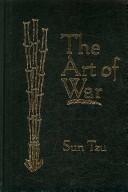
The Art of War
Sun Tzu (-500)
“The most influential military text ever written — a 2,500-year-old manual on winning without fighting that now runs boardrooms, locker rooms, and geopolitics.”
The Art of War— Historical Context & Author Background
Author: Sun Tzu · Published -500· Era: Ancient Chinese / Spring and Autumn Period·96 pages
Themes explored: strategy, deception, leadership, terrain, adaptability, intelligence, economy-of-force
About Sun Tzu
Sun Tzu (Sunzi) is traditionally identified as a military strategist who served King Helu of Wu in the late sixth or early fifth century BCE, during China's Spring and Autumn period — an era of fragmented kingdoms and constant interstate warfare. The earliest biographical account, from Sima Qian's Records of the Grand Historian (circa 94 BCE), describes Sun Tzu demonstrating his methods to the King of Wu by drilling the king's concubines into a disciplined military formation, executing two of the king's favorites when they refused to obey orders. The anecdote — probably apocryphal — establishes Sun Tzu as a figure who privileges discipline over sentiment and results over courtesy. Modern scholars debate whether Sun Tzu was a single historical individual, a composite of several strategists, or a pseudonymous attribution for a text that accreted over centuries. The text itself may have been compiled or revised during the Warring States period (475-221 BCE), several generations after its putative author lived. What is not in dispute is the text's influence: it shaped Chinese military doctrine for two millennia, was adopted by Japanese samurai culture, and became a foundational text of Western strategic theory after its translation into French by Jesuit missionary Jean Joseph Marie Amiot in 1772.
Life → Text Connections
How Sun Tzu's real experiences shaped specific elements of The Art of War.
Sun Tzu reportedly served during the Spring and Autumn period, when dozens of small states competed for survival through constant warfare
The text's emphasis on economy of force and swift campaigns reflects the resource constraints of small states that could not afford prolonged wars
The Art of War is not the product of an empire with unlimited resources but of a vulnerable state that needed to win efficiently or perish. This context explains its preference for intelligence over brute force.
The concubine-drilling anecdote shows Sun Tzu enforcing discipline by executing the king's favorites
The text repeatedly insists that military discipline must be absolute and that personal relationships cannot override command authority
Whether or not the anecdote is historical, it captures the text's philosophical commitment to system over sentiment — a principle that makes it applicable far beyond the military domain.
The historicity debate — Sun Tzu may be a composite author or a pseudonymous attribution
The text is remarkably consistent in voice and argument, suggesting either a single author or a highly disciplined editorial tradition
The authorship question does not diminish the text's influence but does complicate its interpretation: are we reading one genius's system or a civilization's accumulated strategic wisdom?
The text circulated for centuries in manuscript form, with significant textual variants, before being standardized
The discovery of the Yinqueshan Han Slips in 1972 provided the earliest surviving text, confirming some passages and revealing that others may be later additions
The textual history reminds readers that The Art of War is not a fixed document but a living tradition — a text that was itself adapted and modified over centuries, embodying the adaptability it preaches.
Historical Era
Spring and Autumn Period (770-476 BCE) / Warring States Period (475-221 BCE) — ancient China
How the Era Shapes the Book
The Spring and Autumn period's defining feature was competitive fragmentation — dozens of states locked in a Darwinian struggle where strategic miscalculation meant annihilation. This environment produced The Art of War's characteristic urgency and pragmatism: there is no room for romantic notions of honor or glory when the state's survival is at stake. The text's preference for intelligence over force, deception over confrontation, and economy over attrition reflects the resource constraints of small states that could not afford to match larger neighbors in brute military capacity. The era also produced a class of itinerant strategic advisors — scholars who traveled between courts offering their expertise — which explains the text's instructional tone and its assumption that strategic wisdom is a transferable skill rather than an inherited gift.
Why The Art of War Matters Historically
The Art of War is the oldest known treatise on military strategy and the most widely read strategic text in human history. It shaped Chinese military doctrine from the Warring States period through the Qing dynasty, influenced Japanese bushido culture and the samurai tradition, was studied by Napoleon after its 1772 French translation, and became required reading at military academies worldwide (including West Point, Sandhurst, and the US Naval War College) in the twentieth century. Its adoption by the corporate world — beginning with Japanese executives in the 1980s and spreading to Wall Street and Silicon Valley in the 1990s — transformed it from a military manual into a universal philosophy of competitive strategy.
- The earliest known systematic treatise on military strategy and the philosophy of conflict
- The first text to articulate intelligence (espionage) as the foundation of all strategic success
- The first strategic text to explicitly argue that the supreme achievement is winning without fighting
- One of the first texts to treat leadership as a set of learnable skills rather than an inherited trait
Not historically banned in the traditional sense, but the text was closely guarded in ancient China as a state secret — military knowledge was considered too dangerous for wide circulation. During the Qin dynasty's book burnings (213 BCE), military texts were among those targeted for destruction, though The Art of War survived through hidden copies. In modern China, the text was alternately suppressed and promoted depending on the political climate.