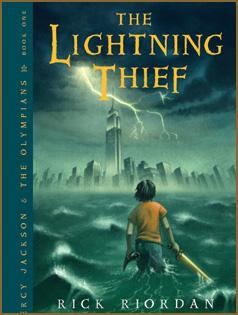
The Lightning Thief
Rick Riordan (2005)
“A boy with ADHD and dyslexia discovers his disabilities are actually the marks of a Greek demigod — and that someone has stolen Zeus's lightning bolt.”
Why This Book Matters
The Lightning Thief launched the Percy Jackson and the Olympians series (45+ million copies sold, 37 languages), which in turn spawned The Heroes of Olympus, The Trials of Apollo, The Kane Chronicles, and Magnus Chase — collectively known as the Riordanverse. More significantly, the novel fundamentally changed how children's literature treats learning disabilities, transforming ADHD and dyslexia from narrative obstacles into narrative assets. Libraries and educators report that the series is consistently the first book many reluctant readers finish voluntarily.
Firsts & Innovations
First major children's series to make a protagonist's learning disabilities central to his heroic identity rather than obstacles to overcome
Pioneered the modern 'mythology-in-the-real-world' genre that spawned dozens of imitators across multiple mythological traditions
One of the first children's novels to successfully structure a modern narrative as a direct parallel to the Odyssey without requiring readers to know the source material
Cultural Impact
45+ million copies sold worldwide across the original five-book series
Disney+ television adaptation (2023-present) with Riordan as co-writer, considered a more faithful adaptation than the widely criticized 2010 and 2013 films
Spawned a mythology education movement — teachers nationwide use the series as a gateway to classical studies
Camp Half-Blood entered popular culture as shorthand for 'a place where misfits belong' — the Hogwarts of Greek mythology
Opened publishing doors for mythology-based children's series from non-Western traditions, including Riordan's own Rick Riordan Presents imprint featuring authors from diverse mythological backgrounds
Banned & Challenged
Challenged in some schools and libraries for promoting 'paganism' and polytheistic religion, and for violence. Also challenged for undermining parental authority (the gods are portrayed as neglectful parents). These challenges are relatively infrequent compared to other frequently banned books.