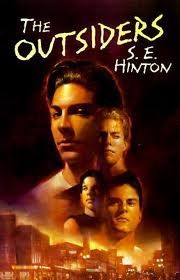
The Outsiders
S.E. Hinton (1967)
“Written by a 16-year-old about teenagers killing teenagers — and the book that proved young adult fiction could be real literature.”
This page prints on a single page. Use Ctrl+P / Cmd+P.
The Outsiders
S.E. Hinton (1967) · 192pages · Contemporary / Young Adult Realism · 2 AP appearances
Summary
Fourteen-year-old Ponyboy Curtis is a greaser — a working-class kid from the wrong side of Tulsa — in constant conflict with the Socs, the wealthy kids who jump greasers for sport. After his best friend Johnny kills a Soc in self-defense, the two go into hiding. When a fire breaks out at an abandoned church, Johnny runs in to save children and is fatally injured. His death, and that of reckless gang member Dally, forces Ponyboy to confront what he's lost — and who he wants to become.
Why It Matters
The Outsiders is the founding text of Young Adult literature as we know it — before it, 'teen books' meant sanitized, suburban, problem-free narratives. Hinton proved that teenagers could handle real violence, real class conflict, real death. It has sold over 14 million copies, has never gone out...
Themes & Motifs
Diction & Style
Register: Casual, vernacular, deliberately teenage — greaser slang coexists with genuine literary sensitivity
Narrator: Ponyboy Curtis: 14 years old, unreliable in the specific way that grief and loyalty make people unreliable, self-awar...
Figurative Language: Low to medium
Historical Context
Mid-1960s America — post-WWII class stratification, juvenile delinquency panic, pre-Vietnam youth culture: The greaser-Soc divide is a product of the specific post-WWII American economy: the GI Bill helped some families into the middle class and left others behind, creating a class stratification that w...
Key Characters
Talking Points
- Ponyboy says he is 'inclined to tell people things' — yet he withholds things from himself throughout the novel, refusing to acknowledge that Johnny and Dally are dead. What is the difference between telling others and telling yourself the truth? Is Ponyboy an honest narrator?
- The novel was written by a 16-year-old girl who published under male initials so boys would read it. How does knowing this change your reading of Ponyboy's voice? Does it make the novel more or less credible as a portrait of teenage masculinity?
- Cherry Valance tells Ponyboy 'things are rough all over.' Is she right? Is there a meaningful difference between Cherry's problems and Ponyboy's problems, even if both are real?
- The Frost poem 'Nothing Gold Can Stay' contains the line 'So Eden sank to grief.' How is The Outsiders a story about a fall from innocence? What is the 'Eden' each major character has already lost or is about to lose?
- Darry hit Ponyboy once. Ponyboy never fully forgives him, yet the novel argues that Darry is a good person making impossible choices. Can both things be true? Does the novel ask us to forgive Darry?
Notable Quotes
“When I stepped out into the bright sunlight from the darkness of the movie house, I had only two things on my mind: Paul Newman and a ride home.”
“We're poorer than the Socs and the middle class. I reckon we're wilder, too. Not like the Socs, who jump greasers and wreck houses and throw beer b...”
“Things are rough all over.”
Why Read This
Because this is the first novel many readers encounter that says: your life, exactly as it is, is worth writing down. Ponyboy is not special because he's exceptional — he's special because someone paid close enough attention to see him clearly. Th...