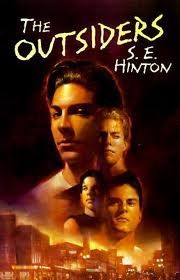
The Outsiders
S.E. Hinton (1967)
“Written by a 16-year-old about teenagers killing teenagers — and the book that proved young adult fiction could be real literature.”
Language Register
Casual, vernacular, deliberately teenage — greaser slang coexists with genuine literary sensitivity
Syntax Profile
Short sentences dominate — average 12-15 words. Ponyboy uses 'I mean' as a verbal tic, signaling his awareness that he might not be believed. Run-on sentences appear during emotional peaks, mirroring the loss of composure. Dialogue is phonetically accurate to a working-class 1960s Oklahoma teenager. Literary passages (Frost, Gone with the Wind) are quoted accurately and treated with reverence — the contrast between the street language and the literary reverence is the character.
Figurative Language
Low to medium — Hinton uses figurative language sparingly but precisely. When Ponyboy describes a sunset or Johnny's eyes, the imagery is unexpectedly precise. Most figurative language is implicit: the golden light, the church fire, the hair. The title itself is the central metaphor.
Era-Specific Language
Greaser superlative: genuinely impressive, authentic, worthy of respect — NOT the same as 'tough'
Short for hoodlum — a delinquent, a criminal, the greaser worst-case identity
Short for Social — the wealthy class kids from the West Side of Tulsa
Slang for gun — Dally carries one
To understand or appreciate — 'Do you dig what I mean?'
Disgusting, lowdown, unfair — class judgment term
Ponyboy's maximum compliment — beyond the normal scale of cool
How Characters Speak — Class & Identity
Ponyboy Curtis
Greaser slang in conversation, literary language in narration — the gap between how he talks and how he thinks is the character's central tension.
A working-class kid with a literary mind the world has decided doesn't exist. His intelligence is legible only to the reader.
Johnny Cade
Speaks little and quietly. When he does speak, he is direct and profound — no performance, no posturing. His silence is class-coded: boys whose voices were never listened to learn to use fewer words.
Total absence of social performance. Johnny has no language of aspiration because no one in his life modeled it. What he has instead is pure perception.
Dally Winston
Aggressive, clipped, profanity-heavy — New York street language grafted onto Tulsa greaser. Talks to get what he wants and stop the conversation.
The voice of someone who learned that conversation is a form of combat. Warmth costs you in his world, so he's eliminated it from his speech almost entirely.
Darry Curtis
Economical, controlled, rarely wrong. When he's angry, the sentences shorten to commands. When he's vulnerable — at the hospital — the control breaks entirely.
A man performing parental authority he was never given the time to grow into. His language is borrowed from responsibility, not from emotional availability.
Sodapop Curtis
Warm, inclusive, frequently laughing — uses more exclamations than anyone. His language is designed to make other people feel good.
Emotional intelligence deployed as survival strategy. Sodapop has decided that the way to live in this world is to make it warmer for everyone around him. It's a choice, not a personality accident.
Cherry Valance
Polished, thoughtful, self-aware — Soc surface with genuine reflection underneath. Speaks in full sentences. Never uses greaser slang.
Class performance intact but under pressure. Cherry has been taught to speak correctly, but she's thinking past the manners. The gap between her speech register and her thoughts is smaller than most Socs.
Bob Sheldon
Barely speaks — we see him almost entirely through other people's descriptions and through his actions. When he does speak, it is possessive and drunk.
The Soc whose money and privilege have made conversation unnecessary. He doesn't need to persuade anyone of anything — he can just act. His death is the consequence of a boy who never had to develop any social skill beyond dominance.
Narrator's Voice
Ponyboy Curtis: 14 years old, unreliable in the specific way that grief and loyalty make people unreliable, self-aware about being a reader in a world that has decided readers can't be greasers. He over-explains. He circles back. He says 'I mean' constantly. His narration is the most authentic teenage voice in American literature not because it's dumbed down but because it's full of contradictions that he hasn't resolved yet — and knows it.
Tone Progression
Chapters 1-3
Tense, conversational, proudly greaser
Ponyboy is explaining his world to someone who doesn't understand it. The defensive energy is present from page one.
Chapters 4-6
Quiet, reflective, afraid
The church chapters. Fear and grief slow the prose. The most literary passages in the novel occur here — Frost, sunsets, Gone with the Wind.
Chapters 7-9
Dissociated, fragmented, barely holding
Multiple deaths in close succession. The prose mirrors psychological breakdown — facts reported without emotional processing.
Chapters 10-12
Integrative, muted, purposeful
The story written means the story survived. The final chapter's prose is the quietest and most controlled. Grief doesn't resolve — it becomes the thing you're carrying.
Stylistic Comparisons
- Catcher in the Rye — same raw teenage first-person voice, but Holden is wealthy where Ponyboy is poor, and Holden's alienation is chosen where Ponyboy's is assigned
- A Separate Peace — same golden-youth-destroyed structure, same lost-innocence grief, but Knowles writes from literary distance where Hinton writes from the inside
- Lord of the Flies — violence among boys as a structural theme, but Golding sees savagery as innate where Hinton sees it as class-produced
Key Vocabulary from This Book
Notable words used in this text — click to see full definitions