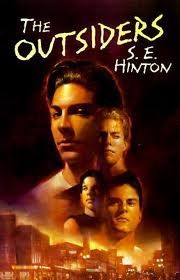
The Outsiders
S.E. Hinton (1967)
“Written by a 16-year-old about teenagers killing teenagers — and the book that proved young adult fiction could be real literature.”
The Outsiders— Historical Context & Author Background
Author: S.E. Hinton · Published 1967· Era: Contemporary / Young Adult Realism·192 pages
Themes explored: class, violence, loyalty, innocence, identity, coming-of-age, family
About S.E. Hinton
Susan Eloise Hinton was born in 1948 in Tulsa, Oklahoma. She began writing The Outsiders at 15, after becoming frustrated that the teen fiction available to her had no relationship to the Tulsa she actually lived in — it was all beach parties and proms. She finished the manuscript at 16. Her agent advised her to use initials rather than her full name so male readers wouldn't dismiss the book. S.E. Hinton was published at 17 years old. The book's dedication — 'To every kid who ever felt like an outsider' — was added later. The novel's accuracy about gang culture, class violence, and teenage psychology came from observation: Hinton grew up knowing kids on both sides of the greaser-Soc divide, and several details (the church, the rumble locations) are drawn from real Tulsa geography. The act of writing the book caused a depression — she had poured everything she had into it and suddenly had nothing to do. Her then-boyfriend (later husband) David Inhofe made her write two pages a day to finish what became her second novel, That Was Then, This Is Now.
Life → Text Connections
How S.E. Hinton's real experiences shaped specific elements of The Outsiders.
Hinton was a high school student in Tulsa during the greaser era — she had friends on both sides of the class divide
The accuracy of Ponyboy's world: the geography, the slang, the specific texture of working-class Tulsa
The novel's power comes from specificity. This is not a generic 'teen novel' — it is a document of a real place and time, and the specificity makes the universal themes land harder.
Hinton was a teenage girl writing under male initials because her publisher feared boys wouldn't read a book written by a woman
The question of who gets to tell which stories — and who gets to claim the voice of experience
The irony is enormous: the most authentic working-class teenage boy narrator in American fiction is written by a 16-year-old girl. The initials were a commercial decision that accidentally proved something important about authorship and voice.
Hinton began writing The Outsiders partly in response to the gang violence she saw around her — a friend was beaten up, and she felt the literary world wasn't paying attention
The novel's origin in righteous anger — Ponyboy's insistence on being seen as a person
The emotional core of the novel is testimony: these people existed, they mattered, the world was wrong about them. That urgency is present on every page because it was the author's actual motivation.
Hinton was 15-17 while writing the book — the same ages as her characters
The psychological accuracy of adolescent grief, loyalty, and the inability to process multiple losses
No adult could have written Ponyboy's dissociation after Johnny and Dally die with that particular accuracy — the way he performs normality while refusing to acknowledge the deaths. Hinton was close enough to the age that she wrote it from the inside.
Historical Era
Mid-1960s America — post-WWII class stratification, juvenile delinquency panic, pre-Vietnam youth culture
How the Era Shapes the Book
The greaser-Soc divide is a product of the specific post-WWII American economy: the GI Bill helped some families into the middle class and left others behind, creating a class stratification that was visible and geographic. Tulsa's East Side/West Side divide was real. The 'juvenile delinquent' panic of the 1950s-60s had given working-class youth a cultural label that preceded any individual's behavior — you were a hood because of your zip code and your haircut, before you did anything. Hinton is writing against that labeling, and she knows it.
Why The Outsiders Matters Historically
The Outsiders is the founding text of Young Adult literature as we know it — before it, 'teen books' meant sanitized, suburban, problem-free narratives. Hinton proved that teenagers could handle real violence, real class conflict, real death. It has sold over 14 million copies, has never gone out of print since 1967, and is one of the most frequently assigned books in American middle schools. Francis Ford Coppola adapted it in 1983 with a cast that became a generation of major actors. The phrase 'stay gold' entered common American language.
- First major Young Adult novel to feature realistic gang violence and class conflict without moralizing
- Among the first novels written by a teenager for teenagers to be treated as serious literature
- First widely-read American novel to center the perspective of the working poor in a contemporary setting without sentimentalizing them
- Helped establish Young Adult as a publishing category — editors began actively seeking teenage-authored, teenager-centered fiction after its success
Frequently challenged and banned for violence, drug use, and 'offensive language.' The irony — that a book about why poor kids get treated unfairly is banned from the schools those kids attend — has not been lost on its defenders.