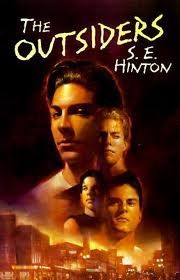
The Outsiders
S.E. Hinton (1967)
“Written by a 16-year-old about teenagers killing teenagers — and the book that proved young adult fiction could be real literature.”
The Outsiders— Summary & Analysis
by S.E. Hinton · published 1967 · 192 pages · Contemporary / Young Adult Realism
A user-friendly study guide for The Outsiders by S.E. Hinton (1967): a high-level plot summary, full chapter-by-chapter analysis, theme breakdowns, character profiles, and 30 essay questions designed for middle-school, high-school readers. Unlike a stock summary, sumsumsum.com adds a diction analysis drawn from S.E. Hinton’s actual text, the 2 documented AP Literature exam appearances of this book, and reading-difficulty guidance (Easy, 1/10) so students, teachers, and lifelong readers know what they are walking into.
“Written by a 16-year-old about teenagers killing teenagers — and the book that proved young adult fiction could be real literature.”
Short Summary
Fourteen-year-old Ponyboy Curtis is a greaser — a working-class kid from the wrong side of Tulsa — in constant conflict with the Socs, the wealthy kids who jump greasers for sport. After his best friend Johnny kills a Soc in self-defense, the two go into hiding. When a fire breaks out at an abandoned church, Johnny runs in to save children and is fatally injured. His death, and that of reckless gang member Dally, forces Ponyboy to confront what he's lost — and who he wants to become.
Detailed Summary
Ponyboy Curtis is 14, an orphan being raised by his oldest brother Darry (20) alongside middle brother Sodapop (16). They're greasers — the poor kids of Tulsa with long greasy hair and denim jackets, perpetually at war with the Socs (short for Socials), the wealthy kids from the West Side who have c...
Summary in the Author’s Writing Style
A retelling of The Outsiders in S.E. Hinton’s style — so you can hear the language, not just the plot. This is a stylistic pastiche written by sumsumsum, not an excerpt from the book.
When I came out of the movie house into the daylight, I had two things on my mind, a movie star and a long walk home, and no idea that everything was about to come apart. I mean, that's how it always goes. You don't see it coming. I'm fourteen and a greaser, which in Tulsa means you live on the wron…
Chapter-by-Chapter Analysis
For comparative essays, pair The Outsiders with
The strongest comparative pairing is The Catcher in the Rye (J.D. Salinger) — Same raw teenage first-person voice — but Holden's alienation is chosen from wealth where Ponyboy's is assigned by poverty. Read together, they define the two poles of American adolescent literature.. Another productive pairing is A Separate Peace (John Knowles) — Same golden-summer, lost-innocence structure — but Knowles writes from literary distance where Hinton writes from the inside. Both ask what it costs a boy to lose his closest friend.. For a third angle, contrast with Lord of the Flies (William Golding) — Violence among boys as a structural theme — but Golding sees savagery as innate where Hinton argues it's class-produced. The two novels are a debate about human nature..
Each of these pairings opens a clean thesis path on shared themes, period diction, or formal influence — useful for AP Lit / IB / first-year college comparative essays.