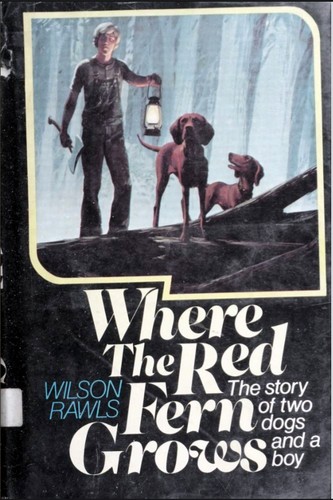
Where the Red Fern Grows
Wilson Rawls (1961)
“A boy, two dogs, and the Ozark wilderness — and the story of what loving something completely costs you.”
Essay Questions & Food for Thought
30questions designed to challenge assumptions and provoke original thinking. These can't be answered from a summary — you need the actual text.
Billy saves for two years before his parents find out. Why does he keep the plan secret? Is this deceptive, or is it something else?
Rawls opens the novel with adult Billy rather than with Billy's childhood. Why start at the end? What does the narrative frame accomplish that starting chronologically wouldn't?
Billy refuses to kill the ghost coon even though he bet on a kill. What does this decision tell us about his moral code? Is he right?
Why does Rawls give Old Dan courage and Little Ann intelligence rather than making both dogs equally skilled? What does their complementarity argue about partnerships?
Billy weeps at Rubin Pritchard's funeral — for a boy who was trying to kill his dog. Is this realistic? What does it reveal about Billy's character?
The novel is set in Cherokee Nation territory, and the red fern comes from Cherokee legend. Why does Rawls root the story's spiritual meaning in indigenous tradition rather than conventional Christian imagery?
Billy's father cannot afford the dogs but shows no resentment when Billy earns them himself. What does this tell us about the father's character? How rare is this response?
The chopping of the sycamore tree takes days. Why does Rawls dedicate so much space to a task that could be summarized in a sentence?
Little Ann dies by choosing not to eat after Old Dan's death. Rawls never says she 'died of grief' — he just describes her behavior. Why is the indirect approach more powerful than stating it directly?
Billy is the youngest and poorest competitor at the championship. How does Rawls use the class difference to create tension — and then resolve it?
Rawls uses almost no figurative language — no metaphors or similes. How does he create emotional impact without the tools most writers rely on?
The novel's title refers to a plant that appears only in the last chapter. Why wait so long? What would be lost if the red fern appeared earlier in the story?
Compare this novel to Old Yeller. Both feature a boy's relationship with a beloved dog that ends in death. How are the two endings different, and which do you think is more honest about grief?
The championship prize money gives Billy's family the funds to move to town for better schooling. Does this feel earned or convenient? How does Rawls make the coincidence believable?
Rawls wrote and rewrote this story for decades before publication, then nearly destroyed it. How does knowing that the story was almost lost change your reading of it?
Billy's walk to Tahlequah is a solo journey through wilderness that most modern children could not make. What does the walk establish about Billy's relationship to the natural world?
Rawls grew up in genuine poverty in these exact hills. How does the authenticity of the setting — and the poverty — affect how you read the novel?
The mountain lion appears late in the novel, after the championship, after the family has decided to move. Is the timing significant? Does it feel like fate or coincidence?
Grandfather Colman appears at every crucial transition in the novel but never gives speeches or lessons. What is Rawls arguing about what wisdom actually looks like in practice?
This novel was written for children but reliably makes adults cry more than children do. Why? What do adults understand about the ending that children don't — or feel differently about?
Rawls never lets Billy express anger — not at the Pritchards, not at the mountain lion, not even at fate when his dogs die. Is the absence of anger realistic? What does it say about Billy's character?
The Cherokee legend says a red fern can only be planted by an angel. Does the novel expect us to believe this literally, or is it using the legend as metaphor?
If Billy had given up — stopped saving, stopped training, quit during the blizzard — what would the novel be saying? What does the refusal to quit argue about what people are capable of?
Rawls burned an early draft of this novel before his wife saved the surviving version. If it had been destroyed, what would literature have lost? What makes this particular story irreplaceable?
Billy is surrounded by people who love him — family, grandfather, even strangers who treat him with kindness. Does this support system make the grief easier or harder to bear? Why?
The novel's title emphasizes the red fern — a symbol of the dogs' grave — rather than the dogs themselves. Why? What does this choice argue about where the novel's meaning ultimately lives?
If you grew up in a city, what elements of this novel are hardest to understand from your own experience? What do you lose — and perhaps gain — as a reader who doesn't know the Ozark hills?
Old Dan dies saving Billy. Little Ann dies following Old Dan. Are both deaths the same kind of love, or different kinds?
The novel ends with the family leaving the Ozarks — a hopeful move toward schooling and opportunity. But the ending feels like loss. Is it possible for a story to be simultaneously hopeful and devastating?
Wilson Rawls said he wrote this novel for the boy he used to be. What do you think he wanted that boy to know? And what does the adult who re-reads it need to hear?