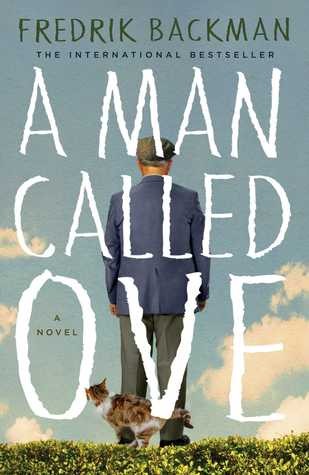
A Man Called Ove
Fredrik Backman (2012)
“The grumpiest man in the world turns out to be the most loving one — if you can survive meeting him.”
This page prints on a single page. Use Ctrl+P / Cmd+P.
A Man Called Ove
Fredrik Backman (2012) · 337pages · Contemporary Fiction
Summary
Ove is a fifty-nine-year-old Swedish widower who has decided to die. His wife Sonja is gone, his job is gone, and he sees no reason to continue. But his plans keep getting interrupted — by a crash-landing new neighbor, a stray cat, a pregnant Iranian woman who won't take no for an answer, and a neighborhood full of people who quietly need him. Told in alternating chapters between present-day Ove and his past, the novel is a slow revelation: the curmudgeon is a man made entirely of love, and the community he resents has already decided he belongs to them.
Why It Matters
A Man Called Ove became an international phenomenon despite — or because of — its utter simplicity. No plot twists, no thriller mechanics, no conceptual games. Just a very specific portrait of a very specific man, and a structural conceit (the alternating timeline) that slowly reverses the reader...
Themes & Motifs
Diction & Style
Register: Accessible, colloquial in present-day sequences; warmer and more retrospective in past-tense chapters
Narrator: Third-person limited, close to Ove in the present and gradually zooming out in the past-tense sequences. The narrator...
Figurative Language: Low-to-moderate
Historical Context
Contemporary Sweden — roughly 2010-2013, against a backdrop of Nordic welfare state transition: The institutional antagonists — the council, the care facility, the corporate 'restructuring' — are specifically contemporary. The novel is set in a moment when the social democratic structures tha...
Key Characters
Talking Points
- Backman never shows Ove's grief directly — we see it only through his routines and reactions. Why is this narrative choice more effective than showing Ove cry or explicitly mourn?
- The novel alternates between present-day chapters and chapters set in Ove's past. At what point did the alternation change how you read the present-day chapters? What specific past chapter was the turning point?
- Ove's suicide attempts are written as comedy. Is this a failure of seriousness or a specific artistic choice? What would be lost if Backman had treated these scenes with conventional gravitas?
- Parvaneh is Iranian-Swedish, and this identity is present in the text (her family, her history, occasional Swedish attitudes toward her) without being the focus of the novel. How does Backman handle her cultural background without making it her entire character?
- Ove's principles — about Saabs, about locked bicycle sheds, about correctly parked cars — are treated as simultaneously ridiculous and admirable. How does Backman hold both of those readings at once?
Notable Quotes
“Ove is the sort of man who checks the status of all things. A man of routine.”
“People said Ove saw the world in black and white. But she was color. All the color he had.”
“He had learned that the world was not a place that awaited you with open arms. You had to knock on its door until your knuckles bled, and even then...”
Why Read This
Because it will make you think about the adults in your life who express love through fixing things and checking up on you and being difficult. You will finish this book and call someone. It is also a very good lesson in how alternating timelines ...