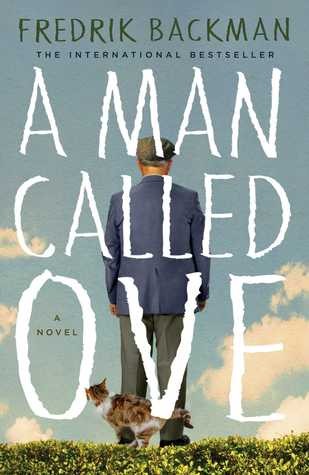
A Man Called Ove
Fredrik Backman (2012)
“The grumpiest man in the world turns out to be the most loving one — if you can survive meeting him.”
A Man Called Ove— Historical Context & Author Background
Author: Fredrik Backman · Published 2012· Era: Contemporary Fiction·337 pages
Themes explored: grief, community, friendship, love, stubbornness, belonging, purpose, generosity
About Fredrik Backman
Fredrik Backman (born 1981) is a Swedish blogger, columnist, and author who began writing A Man Called Ove as a blog post in 2012 about a fictional old man in his neighborhood. The post went viral in Sweden, became a full novel, and was translated into over 40 languages. It spent years on the New York Times bestseller list and was adapted into a Swedish film (2015, Academy Award nominee) and an American film starring Tom Hanks (2022). Backman has described Ove as based partly on his own father and grandfather — men who expressed love through competence and found emotional vocabulary difficult.
Life → Text Connections
How Fredrik Backman's real experiences shaped specific elements of A Man Called Ove.
Backman's blog origin — the novel grew from a character sketch, not a plot outline
Ove's voice is remarkably consistent across 337 pages because it was discovered rather than constructed — Backman found the character before he found the story
Character-first novels have a different texture from plot-first ones. Ove feels discovered, not designed.
Backman's descriptions of his own father and grandfather as men who showed love through fixing and building rather than speech
Ove's entire emotional vocabulary — the fixing, the checking, the practical intervention — is a portrait of a specific generational masculine style
The novel is partly an act of translation: converting a foreign emotional language into one that a broader audience can receive.
Backman's Swedish cultural background — Jante Law, folkhemmet, the postwar welfare state housing estate
The residential area, the council, the neighbors' mutual obligation — all coherent within a specifically Swedish social arrangement
The novel's universality is built on intense specificity. Understanding the Swedish context makes the universals legible.
Historical Era
Contemporary Sweden — roughly 2010-2013, against a backdrop of Nordic welfare state transition
How the Era Shapes the Book
The institutional antagonists — the council, the care facility, the corporate 'restructuring' — are specifically contemporary. The novel is set in a moment when the social democratic structures that Ove's generation built and trusted (cradle-to-grave welfare, stable employment, community housing) are being dismantled by market logic. Ove's resistance to this is not nostalgia but a lived understanding of what is being lost.
Why A Man Called Ove Matters Historically
A Man Called Ove became an international phenomenon despite — or because of — its utter simplicity. No plot twists, no thriller mechanics, no conceptual games. Just a very specific portrait of a very specific man, and a structural conceit (the alternating timeline) that slowly reverses the reader's judgment of him. It proved that literary fiction about grief, community, and love could reach a mass audience without condescension.
- Originated as a blog post — one of the first literary novels to emerge from long-form social media
- Established Backman as the leading exponent of what critics called 'Nordic warmth' fiction — a counterpoint to Scandinavian noir
- Demonstrated that a non-English European novel without crime, politics, or genre mechanics could reach the top of the US bestseller list
Not a frequent target of censorship challenges. The novel's subject matter — grief, community, an older white protagonist — does not typically activate the pressure points that bring books before school boards. Its quiet radicalism (multicultural community presented as entirely normal, gay character treated with complete matter-of-factness) has not attracted organized opposition.