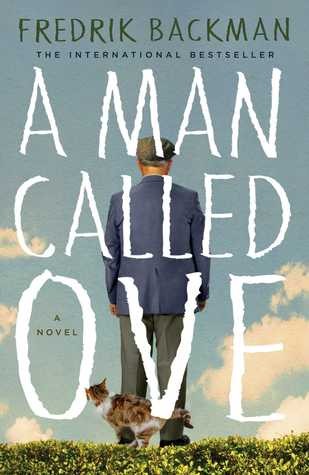
A Man Called Ove
Fredrik Backman (2012)
“The grumpiest man in the world turns out to be the most loving one — if you can survive meeting him.”
A Man Called Ove— Summary & Analysis
by Fredrik Backman · published 2012 · 337 pages · Contemporary Fiction
A user-friendly study guide for A Man Called Ove by Fredrik Backman (2012): a high-level plot summary, full chapter-by-chapter analysis, theme breakdowns, character profiles, and 30 essay questions designed for high-school readers. Unlike a stock summary, sumsumsum.com adds a diction analysis drawn from Fredrik Backman’s actual text, and reading-difficulty guidance (Easy, 1/10) so students, teachers, and lifelong readers know what they are walking into.
“The grumpiest man in the world turns out to be the most loving one — if you can survive meeting him.”
Short Summary
Ove is a fifty-nine-year-old Swedish widower who has decided to die. His wife Sonja is gone, his job is gone, and he sees no reason to continue. But his plans keep getting interrupted — by a crash-landing new neighbor, a stray cat, a pregnant Iranian woman who won't take no for an answer, and a neighborhood full of people who quietly need him. Told in alternating chapters between present-day Ove and his past, the novel is a slow revelation: the curmudgeon is a man made entirely of love, and the community he resents has already decided he belongs to them.
Detailed Summary
Ove Anderson is a man of firm principles. He drives a Saab. He checks that the neighbors have locked the bicycle shed. He enforces the traffic rules in the residential area with the quiet fury of a man who believes civilization depends on people doing things correctly. He is fifty-nine years old, re...
Summary in the Author’s Writing Style
A retelling of A Man Called Ove in Fredrik Backman’s style — so you can hear the language, not just the plot. This is a stylistic pastiche written by sumsumsum, not an excerpt from the book.
Ove is fifty-nine years old. He drives a Saab. He believes a man should pay his debts, return his trolley, and check that the door to the bicycle shed is locked, because that is what a man does. The people in the residential area drive their cars where signs clearly forbid it. Ove finds this difficu…
Chapter-by-Chapter Analysis
If you liked A Man Called Ove, read next
Start with The Curious Incident of the Dog in the Night-Time by Mark Haddon — Another novel about a protagonist whose interior life is richer and more complex than his social surface suggests — and whose 'difficult' behavior turns out to be a specific form of love and logic. Then try Wonder by R.J. Palacio — Community as the thing that forms around a person who initially seems hard to include — and the revelation that the difficult person was always the necessary one. Or pivot to The Book Thief by Markus Zusak — Another novel that uses an unusual narrative structure and tonal register (dark comedy, ironic distance) to approach devastating grief and loss.