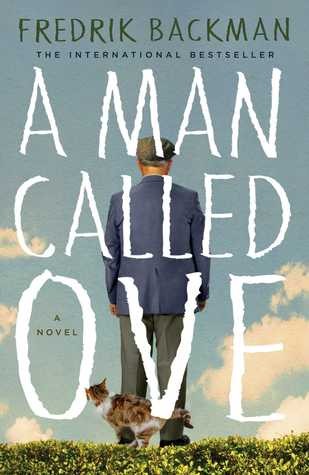
A Man Called Ove
Fredrik Backman (2012)
“The grumpiest man in the world turns out to be the most loving one — if you can survive meeting him.”
A Man Called Ove— Essay Questions & Discussion Prompts
Essay Questions & Food for Thought
30questions designed to challenge assumptions and provoke original thinking. These can't be answered from a summary — you need the actual text.
Backman never shows Ove's grief directly — we see it only through his routines and reactions. Why is this narrative choice more effective than showing Ove cry or explicitly mourn?
The novel alternates between present-day chapters and chapters set in Ove's past. At what point did the alternation change how you read the present-day chapters? What specific past chapter was the turning point?
Ove's suicide attempts are written as comedy. Is this a failure of seriousness or a specific artistic choice? What would be lost if Backman had treated these scenes with conventional gravitas?
Parvaneh is Iranian-Swedish, and this identity is present in the text (her family, her history, occasional Swedish attitudes toward her) without being the focus of the novel. How does Backman handle her cultural background without making it her entire character?
Ove's principles — about Saabs, about locked bicycle sheds, about correctly parked cars — are treated as simultaneously ridiculous and admirable. How does Backman hold both of those readings at once?
Mirsad (the young gay man whose family rejects him) is driven to the bus station by Ove in complete silence on the subject of his sexuality. What does Ove's silence communicate? Is it acceptance, avoidance, or something else?
The novel ends not with Ove's death in the present-tense narrative but with a forward projection to his death years later. Why does Backman make this structural choice? What would be lost if the novel ended at Ove's last present-day scene?
Ove and his father never say 'I love you.' Neither does Ove and Sonja (at least not in the scenes we see). Does the absence of the phrase matter? Does the novel suggest we need those words, or does it suggest the opposite?
Saab went bankrupt in 2011, one year before this novel was published. Ove drives a Saab. Is this a coincidence, a subtle political comment, or something else? What does a man who drives a defunct car brand say about how he relates to time?
The cat is never named. Why not? What would a name change about the cat's function in the novel?
Compare Ove's response to Sonja's accident and cancer to his response to Rune's dementia. What is he fighting for in each case, and what does it tell you about his values?
Backman uses the specific mundane detail (bleeding a radiator, checking a bicycle shed lock) to carry emotional weight. Find two examples where a practical task represents something emotionally larger. How does he make the translation work?
Is Ove's rigidity a character flaw? The novel seems to suggest both yes and no. What is the case for it being a strength? What is the case for it being a limitation?
The novel's Swedish cultural context — Jante Law, the welfare state, the specific housing estate model — shapes everything. How would this story be different if set in America? Would Ove make sense in an American context?
Every character who approaches Ove comes with a practical need (a ladder, a radiator, a drive). None of them approaches him with an emotional need. Why? Is this realism, or a structural choice Backman makes to match Ove's limitations?
The novel's present-tense timeline covers only a few months. Is that enough time to transform a life? Or is the argument that nothing is transformed — only revealed?
Jimmy and Ove are described as having a decades-long friendship that never involves emotional disclosure. Is this a friendship? What does the novel say about what friendship requires?
The council, the hospital, the care facility — all institutional antagonists in the novel. What is Backman saying about the relationship between bureaucracy and human dignity?
Tom Hanks was cast to play Ove in the 2022 American remake. What does that casting choice tell you about how American audiences were expected to read the character? Would the film have been different with a less beloved actor?
Sonja's death is not described in the novel. We know it has happened; we are not shown it happening. Why does Backman make this choice? What is the effect of the gap?
The novel is titled after Ove, but Parvaneh is arguably its co-protagonist. What would be gained or lost by centering the title on her perspective?
Compare A Man Called Ove to The Giver or Wonder — other novels about outsider characters whose interior lives are richer than their surfaces suggest. What does this type of character (the misread protagonist) do for a reader?
Backman writes Ove's contempt for 'computer people' and the iPad salesperson with clear sympathy for Ove's position. Is the novel anti-technology? Or is it making a different argument about what gets lost when everything is digital?
The novel has an extremely happy ending (Ove lives, the community forms, his funeral is packed) given that it begins with a man trying to die. Is the ending earned? Does Backman cheat to get there?
Ove checks the residential area every morning for decades. What is this ritual for? Is it community service, grief management, control, or love — or all four simultaneously?
The novel was a blog post before it was a novel. Does knowing this change how you read its episodic structure? Is the chapter-by-chapter interruption of Ove's suicide plans a form that makes more sense in serial blog form?
Ove's father taught him by doing things beside him, not by explaining. Ove teaches Patrick the same way. What is Backman saying about how values are actually transmitted between generations?
If Sonja had lived, would Ove have been a better or worse neighbor? Would the community around him be as close?
The novel is funny. Identify three scenes that made you laugh, and analyze what technique Backman uses to generate the comedy. What is the relationship between humor and grief in this novel?
Ove's grave will presumably be maintained by someone after he dies — Parvaneh, or her children. What does the idea of his standards outliving him say about the novel's argument for community and continuity?