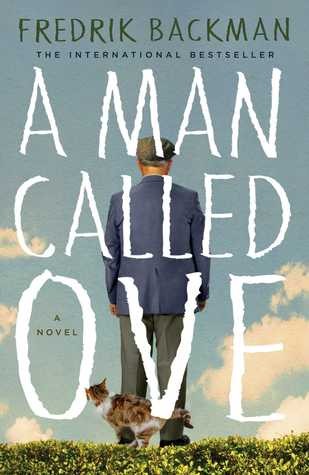
A Man Called Ove
Fredrik Backman (2012)
“The grumpiest man in the world turns out to be the most loving one — if you can survive meeting him.”
Language Register
Accessible, colloquial in present-day sequences; warmer and more retrospective in past-tense chapters
Syntax Profile
Short, declarative sentences for Ove's present-day interior monologue and action sequences. The past-tense chapters (Sonja, the father, young Ove) use longer, more cadenced sentences with occasional lyrical flourishes. Dialogue is economical and character-specific: Parvaneh speaks in run-on sentences full of energy; Ove's speech is minimal and correct.
Figurative Language
Low-to-moderate — Backman is not a metaphor-heavy writer. When he does use figurative language, it tends to be domestic and unpretentious ('she was color, all the color he had'). The power comes from understatement and precision rather than ornamentation.
Era-Specific Language
Swedish car brand associated with engineering pride, working-class quality, obsolescence — Ove's Saab is his identity expressed in metal
Swedish municipal bureaucracy, the institutional antagonist of the novel — represents impersonal authority overriding human dignity
The planned Swedish housing development — a specifically postwar Scandinavian social arrangement implying community obligation and shared maintenance
Ove's category for the administrative class who manage rather than do — people for whom things are abstractions rather than objects
Corporate euphemism for redundancy — used to describe Ove's forced retirement. Backman treats bureaucratic language with the same contempt as Ove does.
How Characters Speak — Class & Identity
Ove
Practical, technical vocabulary. Never complains about cost directly — but his choices (Saab, not a newer car; a small house, maintained meticulously) are the vocabulary of working-class dignity.
A man who values what he makes and maintains over what he buys. His class is expressed through competence, not consumption.
Parvaneh
Warm, direct, code-switches between Persian and Swedish idiom naturally. Not class-marked — she is the novel's socially mobile character, at ease across registers.
Immigrant adaptability as a form of social intelligence. Parvaneh speaks to Ove in the language he understands: directness.
The council / administrators
Bureaucratic euphemism: 'restructured,' 'care facility,' 'assessment.' Language that removes human beings from decision-making.
Institutional language as the dialect of power that Ove cannot speak and refuses to accept.
Narrator's Voice
Third-person limited, close to Ove in the present and gradually zooming out in the past-tense sequences. The narrator is gently ironic about Ove without mocking him — there is a warmth in the narrative distance that tells you the author loves this character even when finding him ridiculous. The dramatic irony (we understand Ove's grief before he will name it) is sustained by a narrator who knows more about Ove's inner life than Ove does.
Tone Progression
Opening chapters (1-4)
Comic, irritable, surface-level
Ove at full curmudgeon. The comedy is consistent but the surface is opaque. We laugh at him before we understand him.
Middle chapters (5-10)
Comic with accumulating warmth; past chapters increasingly tender
The alternating structure begins paying off. Each past chapter deepens the present-day comedy — we laugh differently once we know about Sonja.
Final chapters (11-14)
Warm, elegiac, occasionally transcendent
The comedy doesn't disappear but it becomes affectionate. The reader is fully inside Ove's perspective — his judgments feel like love now, not irritation.
Stylistic Comparisons
- Tuesdays with Morrie (Albom) — another novel about a difficult old man and a young person who reveals his hidden warmth, but Backman's comedy and specificity go much deeper
- The Curious Incident of the Dog in the Night-Time — protagonist with an unconventional interior life that the novel gradually decodes for the reader
- Stoner (Williams) — another portrait of a quiet life fully lived, grief expressed through routine and work
Key Vocabulary from This Book
Notable words used in this text — click to see full definitions