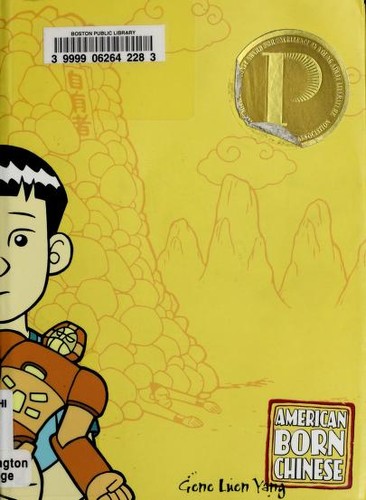
American Born Chinese
Gene Luen Yang (2006)
“Three stories about hiding who you are — a Chinese folk hero, a second-generation kid, and a sitcom nightmare — crash together in a twist that redefines all of them.”
Why This Book Matters
The first graphic novel to win the Michael L. Printz Award (2007) and the first to be nominated for a National Book Award (Young People's Literature, 2006). American Born Chinese shattered the perception that graphic novels were not 'real literature' and that Asian American stories were niche. It demonstrated that the graphic novel form could achieve the same thematic complexity as prose fiction — and in some cases, more, because racism operates through images and the medium can make that operation visible.
Firsts & Innovations
First graphic novel to be a National Book Award finalist (2006)
First graphic novel to win the Michael L. Printz Award for Excellence in Young Adult Literature (2007)
One of the first works to deliberately deploy racist caricature as a tool for anti-racist critique in a young adult context
Pioneered the use of multi-strand graphic novel structure where separate narratives converge to reveal a single argument
Cultural Impact
Became one of the most taught graphic novels in American middle and high schools
Adapted into a Disney+ series (2023) that expanded the story while maintaining Yang's core themes
Opened the door for a generation of Asian American graphic novelists and cartoonists
Regularly appears on banned/challenged book lists — often for the very stereotypes Yang uses to critique racism
Cited by scholars as a landmark in Asian American literary studies and graphic novel theory
Helped establish the graphic novel as a legitimate form for AP English and college literature courses
Banned & Challenged
Frequently challenged and banned in schools, particularly for the Chin-Kee sections. The irony is sharp: the book is banned for depicting stereotypes that it exists to dismantle. Challengers argue that Chin-Kee's appearance and language are offensive; Yang's defense — and the defense of most literary scholars — is that the offense is intentional, pedagogical, and directed at the stereotypes themselves, not at Chinese people. The banning controversy has itself become a teaching moment about the difference between depicting racism and endorsing it.