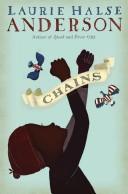
Chains
Laurie Halse Anderson (2008)
“A thirteen-year-old enslaved girl discovers that the Revolutionary War's promise of liberty was never meant for her.”
Chains— Historical Context & Author Background
Author: Laurie Halse Anderson · Published 2008· Era: Contemporary Young Adult Historical Fiction·316 pages
Themes explored: slavery, freedom, revolution, identity, loyalty, resistance, american-hypocrisy
About Laurie Halse Anderson
Laurie Halse Anderson (b. 1961) is best known for Speak (1999), a novel about a teenage sexual assault survivor that became one of the most taught — and most banned — books in American schools. Anderson is drawn to stories about young people who are silenced by systems of power and who must find their voices in order to survive. She spent years researching the historical conditions of slavery in Revolutionary-era New York for Chains, working with primary sources, slave narratives, and the archives of the New-York Historical Society. The novel is the first in a trilogy (Chains, Forge, Ashes) that follows Isabel and Curzon through the American Revolution.
Life → Text Connections
How Laurie Halse Anderson's real experiences shaped specific elements of Chains.
Anderson's career-long focus on silenced protagonists — from Melinda in Speak to Isabel in Chains
Isabel's narration is defined by what she cannot say aloud. Her survival depends on silence, and her liberation requires voice.
Anderson writes the same story across genres and centuries: a young person is silenced by power, and the act of speaking — or writing, or reading — is the first step toward freedom.
Years of archival research into enslaved people's lives in Revolutionary New York — court records, runaway ads, church registries
The novel's historical accuracy — street names, military events, legal codes, the demographics of enslaved New Yorkers
The research makes the novel a corrective to the mythology of the American founding. Anderson writes history that textbooks omit.
Anderson has spoken publicly about writing for young readers who are themselves experiencing powerlessness — in abusive homes, in unjust school systems
Isabel's age and her position within an absolute power structure make her accessible to young readers who understand institutional helplessness
The novel works as both historical fiction and contemporary allegory. Readers in systems they cannot control recognize Isabel immediately.
Anderson structured Chains as the first of a trilogy, knowing Isabel's story could not be resolved in a single volume
The novel ends on the water, in transit, without resolution — Isabel is free but not safe, liberated but not reunited with Ruth
The open ending reflects historical reality. Escape from slavery was not a conclusion but a beginning — the start of a different kind of struggle.
Historical Era
1776 — American Revolution, British occupation of New York City
How the Era Shapes the Book
The American Revolution provides the novel's central irony: a war fought for liberty by a nation that enslaved roughly twenty percent of its population. Anderson uses the historical setting not as backdrop but as argument. Every scene is structured around the gap between revolutionary rhetoric and revolutionary practice. The Declaration of Independence, the military campaigns, the political conspiracies — all exist in the novel simultaneously with branding irons, slave auctions, and family separations. Anderson insists that these are not separate histories but the same history, seen from different positions within the power structure.
Why Chains Matters Historically
Chains is one of the first widely adopted middle-grade novels to place an enslaved protagonist at the center of the American Revolution. Before its publication, the dominant narrative of the Revolution in children's literature focused almost exclusively on white Patriot perspectives. Anderson's novel introduced millions of young readers to the historical reality that the founding of the United States was inseparable from the institution of slavery — a corrective that has made the book both celebrated and frequently challenged.
- Among the first YA novels to center an enslaved girl's perspective during the American Revolution
- Pioneered the use of primary-source historical research in accessible middle-grade historical fiction
- One of the first children's novels to explicitly connect the Declaration of Independence to the hypocrisy of slaveholding founders
Frequently challenged in school districts for its depictions of violence against enslaved people — particularly the branding scene — and for its critical portrayal of the Founding Fathers as slaveholders. Some challenges have cited the book's 'negative' depiction of American history, arguing it is inappropriate for young readers. The irony of banning a book about silencing people is not lost on its defenders.