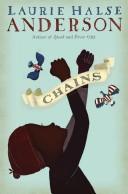
Chains
Laurie Halse Anderson (2008)
“A thirteen-year-old enslaved girl discovers that the Revolutionary War's promise of liberty was never meant for her.”
Chains— Summary & Analysis
by Laurie Halse Anderson · published 2008 · 316 pages · Contemporary Young Adult Historical Fiction
A user-friendly study guide for Chains by Laurie Halse Anderson (2008): a high-level plot summary, full chapter-by-chapter analysis, theme breakdowns, character profiles, and 30 essay questions designed for middle-school, high-school readers. Unlike a stock summary, sumsumsum.com adds a diction analysis drawn from Laurie Halse Anderson’s actual text, the 1 documented AP Literature exam appearance of this book, and reading-difficulty guidance (Easy, 2/10) so students, teachers, and lifelong readers know what they are walking into.
“A thirteen-year-old enslaved girl discovers that the Revolutionary War's promise of liberty was never meant for her.”
Short Summary
Isabel, a thirteen-year-old enslaved girl in 1776 New York, is promised freedom in her owner's will but is instead sold — along with her younger sister Ruth — to the cruel Loyalist Anne Lockton. As the American Revolution rages around her, Isabel spies for the Patriot rebels in exchange for the promise of emancipation. When both sides betray her and Ruth is sold away, Isabel is branded on the cheek with the letter 'I' for insolence. She ultimately realizes that neither Patriot nor Loyalist will free her, and she must seize her own liberty. On Christmas night 1776, Isabel escapes across the river to New Jersey, taking the imprisoned Patriot soldier Curzon with her.
Detailed Summary
Isabel and her younger sister Ruth are enslaved in Rhode Island. When their owner, Miss Mary Finch, dies, Isabel believes they will be freed — Miss Finch's will promised it. But the executor of the estate, the lawyer Robert Finch, sells the girls instead to the Locktons, a wealthy Loyalist couple re...
Summary in the Author’s Writing Style
A retelling of Chains in Laurie Halse Anderson’s style — so you can hear the language, not just the plot. This is a stylistic pastiche written by sumsumsum, not an excerpt from the book.
The day they buried Miss Mary Finch, I believed we were free. Her will said so. I had heard her say the words myself, and words on paper were supposed to hold. But the lawyer came, and the paper was gone, or said to be gone, and Ruth and me were not people anymore. We were two figures on a bill of s…
If you liked Chains, read next
Start with Kindred by Octavia Butler — A modern Black woman transported to antebellum slavery — Butler uses science fiction to create the same shock of recognition Anderson achieves through historical fiction. Then try Nightjohn by Gary Paulsen — Another YA novel centering literacy under slavery — shorter and more brutal, Nightjohn is the companion piece that proves Anderson's themes are not isolated. Or pivot to Roll of Thunder, Hear My Cry by Mildred D. Taylor — Set in the Jim Crow South rather than the Revolution, but shares Chains' focus on a young Black girl navigating a system designed to crush her family.
For comparative essays, pair Chains with
The strongest comparative pairing is Beloved (Toni Morrison) — The adult masterwork on slavery's violence and memory — Morrison writes what Anderson's YA audience will be ready for later: the haunting that never ends. Another productive pairing is Narrative of the Life of Frederick Douglass (Frederick Douglass) — The primary source behind novels like Chains — Douglass's autobiography shares the same literacy-as-liberation structure and the same controlled rage. For a third angle, contrast with The Underground Railroad (Colson Whitehead) — Whitehead literalizes the metaphor of escape that Anderson renders historically — both novels insist that freedom is seized, not granted.
Each of these pairings opens a clean thesis path on shared themes, period diction, or formal influence — useful for AP Lit / IB / first-year college comparative essays.
More from Laurie Halse Anderson and the scholars who study Anderson
Other works by Laurie Halse Anderson: Fever 1793 (2000, 251 pages), Speak (1999, 198 pages). Reading two or three of these in sequence reveals Laurie Halse Anderson’s recurring obsessions and stylistic signatures more clearly than any single book can.