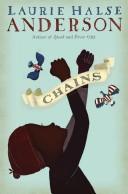
Chains
Laurie Halse Anderson (2008)
“A thirteen-year-old enslaved girl discovers that the Revolutionary War's promise of liberty was never meant for her.”
For Students
Because the American Revolution you learned about in elementary school left out the people who mattered most. Chains puts you inside the experience of a girl your age who watches the Declaration of Independence being celebrated by people who own her. It will make you angry, and it should — not at America, but at the version of American history that pretended slavery was somewhere else while the founders were writing about freedom. Isabel is one of the most intelligent, resourceful protagonists in YA literature, and she earns her ending through courage that makes battlefield heroism look easy.
For Teachers
A natural companion to any American Revolution unit — the novel provides the perspective that textbooks systematically omit. The branding scene alone generates weeks of discussion about power, resistance, and whose bodies bear the cost of national mythology. At a second-grade reading difficulty with college-level thematic complexity, it meets students where they are linguistically while challenging them intellectually. The essay questions generated by this text are among the richest in historical fiction.
Why It Still Matters
Every country has a founding mythology that excludes the people it was built on. Chains is about America in 1776, but its argument applies anywhere: freedom that is not universal is not freedom, it is privilege with good marketing. Isabel's experience — promised liberty by systems that never intended to deliver it — is still happening to people around the world who are told to wait, to be patient, to trust the process. The novel's answer is Isabel's answer: stop waiting. Row.