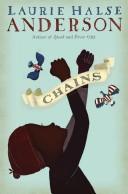
Chains
Laurie Halse Anderson (2008)
“A thirteen-year-old enslaved girl discovers that the Revolutionary War's promise of liberty was never meant for her.”
Essay Questions & Food for Thought
30questions designed to challenge assumptions and provoke original thinking. These can't be answered from a summary — you need the actual text.
The novel is titled Chains — not Slavery, not Bondage, not Captivity. Why 'chains' specifically? What does the word carry that those alternatives do not, and how does its meaning shift by the novel's end?
Isabel spies for the Patriots and delivers intelligence that helps foil an assassination plot against George Washington. The Patriots reward her with nothing. Why does Anderson include this betrayal, and what argument is she making about the Revolution's relationship to enslaved people?
The branding scene is the most physically violent moment in the novel. Why does Anderson write it in such graphic, sensory detail rather than cutting away? What is the reader's responsibility when confronted with this scene?
Isabel reclaims the 'I' branded on her cheek as standing for 'Isabel' rather than 'insolence.' Is this reclamation convincing, or is it a coping mechanism? Can a mark of oppression truly be transformed into a mark of identity?
Anderson sets Isabel's escape on the same night as Washington's crossing of the Delaware. Why this parallel? What is Anderson arguing by placing a personal escape alongside a national military operation?
Neither the Patriots nor the Loyalists intend to free Isabel. If both sides are equally indifferent to enslaved people, why does it matter which side wins the war? Does the novel suggest it matters?
Lady Seymour treats Isabel with genuine kindness but never questions the institution of slavery. Is she a good person? Can someone be morally decent within a morally indecent system?
Ruth's sale to Charleston happens while Isabel is out of the house. Why does Anderson choose to have Isabel absent for the most devastating moment of the novel? What is the effect of learning about the loss after the fact?
Isabel's literacy — her ability to read and write — is the tool she uses to forge the pass that enables her escape. Why does Anderson make literacy the specific instrument of liberation?
The novel ends on the water — Isabel and Curzon in a boat, between New York and New Jersey, between enslavement and an uncertain freedom. Why does Anderson refuse to show them reaching the other side?
Curzon believes the Patriot cause will lead to universal emancipation. Isabel does not. Who is right — and does the novel present Isabel's cynicism as wisdom or as a different kind of limitation?
Madam Lockton is not a caricature — Anderson gives her a coherent worldview in which disciplining enslaved people is a natural and necessary part of social order. Why is it important that the novel's antagonist believes she is right?
The Declaration of Independence appears in the novel as a document Isabel can read. What is the effect of having an enslaved person parse 'all men are created equal' in real time?
Compare Isabel's experience of the American Revolution to what you learned about the Revolution in elementary school. What was missing from the version you were taught? Why was it missing?
The Great Fire of New York destroys a quarter of the city and, as Isabel observes, treats everyone equally — Patriot and Loyalist, free and enslaved. Why does Anderson include the fire? What does a force that ignores social hierarchy reveal about the hierarchy itself?
Isabel decides to rescue Curzon from British prison even though he is weak and will slow her escape. Why does she make this choice? Is it strategic, moral, or emotional — and does the distinction matter?
Anderson based the Hickey Plot, the Battle of Brooklyn, the Great Fire, and the prison conditions on documented historical events. Why does grounding the fiction in verified history matter for this particular story?
Isabel says she was 'a fool to think that their words about freedom meant me.' Is this a moment of wisdom or a moment of despair? Can it be both?
How does Chains compare to Frederick Douglass's Narrative of the Life of Frederick Douglass? Both center literacy as a tool of liberation. Both describe the violence of enslavement. What does the fictional account do that the autobiography cannot, and vice versa?
The novel is written for middle-school readers but deals with branding, family separation, political betrayal, and systemic racism. At what age should students read this book? Is there an age at which these truths are 'too much'?
Master Lockton is less overtly cruel than Madam Lockton, but he is arguably more dangerous. He operates through money, politics, and legal ownership rather than physical violence. Which form of power does more damage — and which is easier to see?
Isabel's voice is described as mature beyond her years — controlled, analytical, restrained. Why does Anderson write a thirteen-year-old narrator this way? What has happened to Isabel's childhood?
The novel takes place in 1776 but was published in 2008. What was happening in America in 2008 that might have made this story feel especially urgent?
Chains is the first book in a trilogy. The sequel, Forge, is told partly from Curzon's perspective. Why might Anderson have chosen to shift narrators? What can Curzon see that Isabel cannot?
Isabel chooses to escape without Ruth, knowing she cannot reach Charleston. Is this a betrayal of Ruth, a necessary sacrifice, or the only possible choice? Does the novel present it as heroic or tragic?
Some school districts have banned Chains for its 'negative portrayal of American history.' What does banning a book about silencing people say about the banning institution? Is there an irony Anderson might appreciate?
Water appears throughout the novel — the journey from Rhode Island, the harbor, the river crossing. What is water doing symbolically across the full narrative?
Compare Chains to a modern story about someone trapped in a system that promises fairness but delivers inequality — a wrongful conviction narrative, an immigration story, a story about economic injustice. What structural parallels exist?
Anderson uses chapter epigraphs drawn from real historical documents — newspaper ads for runaway slaves, legal codes, political speeches. Why begin each chapter with a primary source? What effect does it have on the reader's experience of the fiction?
If Isabel were alive today and could read a modern American history textbook's chapter on the Revolution, what would she say? Write her response in her voice.