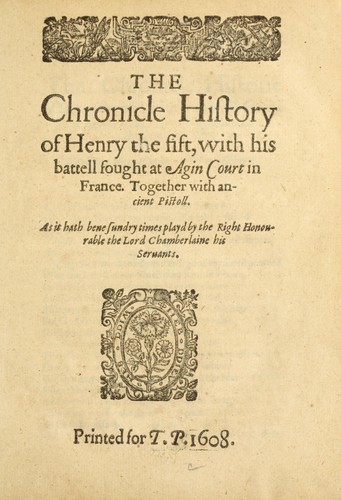
Henry V
William Shakespeare (1599)
“A young king invades France, wins an impossible battle, and delivers the greatest motivational speech in English literature — but Shakespeare keeps asking whether any of it is heroic.”
At a Glance
Henry V, the newly crowned King of England, invades France to claim the French throne. After a brutal siege at Harfleur, his starving, outnumbered army faces a vastly superior French force at Agincourt. Henry rallies his men with the St Crispin's Day speech — one of the most famous passages in English — and wins a miraculous victory. He negotiates peace, woos the French princess Katherine, and unites the two crowns. The Chorus frames the entire play as a theatrical event, constantly reminding the audience they are watching actors on a stage, not a real war.
Read full summary →Why This Book Matters
Henry V is the most influential work of English-language war literature. The St Crispin's Day speech has been quoted by military leaders from Wellington to Eisenhower. The play established the template for the 'band of brothers' narrative that shapes how English-speaking cultures think about war: a small group of brave men, outnumbered but morally unified, defeating a larger enemy through courage and fellowship. But Shakespeare also embedded the counter-narrative — the killing of prisoners, the coerced marriage, the Chorus's theatrical disclaimers, the Epilogue's destruction of the victory — ensuring that every generation can find both the patriotic reading and the anti-war reading in the same text.
Diction Profile
Public oratory dominant — Henry's speeches are designed for audiences within the play, making the entire text a study in rhetoric as performance
Moderate to high