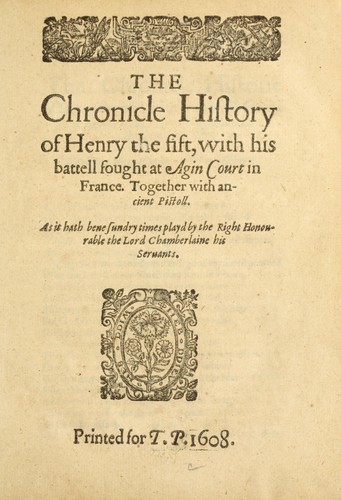
Henry V
William Shakespeare (1599)
“A young king invades France, wins an impossible battle, and delivers the greatest motivational speech in English literature — but Shakespeare keeps asking whether any of it is heroic.”
Similar Books
Thematic connections across eras and genres — books that talk to each other.
Hamlet
William Shakespeare
Where Hamlet cannot act despite thinking brilliantly, Henry acts brilliantly while his thinking remains opaque. Both plays interrogate whether eloquent language reveals or conceals the speaker's true nature.
Julius Caesar
William Shakespeare
Both plays center on political rhetoric and the gap between a leader's public image and private reality. Brutus's funeral oration and Henry's St Crispin's Day speech are companion studies in the power of words to shape political reality.
Macbeth
William Shakespeare
Macbeth and Henry both seize power through violence and justify it through different means — Macbeth through self-deception, Henry through legal argument and divine attribution. Both plays ask what legitimate authority looks like when it is founded on blood.
All Quiet on the Western Front
Erich Maria Remarque
Remarque's novel is the direct descendant of the tension Shakespeare builds between Henry's inspirational rhetoric and the common soldiers' experience. The gap between patriotic speeches and battlefield reality is the same gap — just 500 years later.
The Things They Carried
Tim O'Brien
O'Brien's metafictional war narrative shares Henry V's obsession with the relationship between war stories and war reality. Both works ask: can the story of a war ever be true, or is every war narrative a kind of performance?
Othello
William Shakespeare
Both plays feature military leaders whose rhetorical gifts are central to their identity. Othello's language, like Henry's, is both his power and his vulnerability — eloquence that can inspire or destroy depending on who controls the narrative.