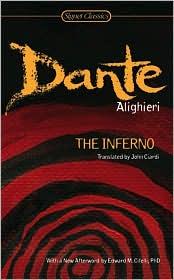
Inferno
Dante Alighieri (1320)
“A poet walks through Hell and finds everyone he ever hated there — then writes the most beautiful poetry in any language to describe their suffering.”
At a Glance
Midway through his life, the poet Dante finds himself lost in a dark wood, unable to find the right path. The Roman poet Virgil, sent by Dante's beloved Beatrice from Heaven, appears as his guide. Together they descend through the nine circles of Hell, witnessing punishments that mirror the sins committed: the lustful blown by winds, the wrathful fighting in mud, the fraudulent trapped in ditches of excrement and fire. Each punishment is a contrapasso — the sin turned back upon itself. Dante meets historical figures, mythological characters, and his own political enemies, all frozen in the consequences of their choices. At the bottom, Satan himself is encased in ice, weeping and chewing on Judas, Brutus, and Cassius. Dante and Virgil climb down Satan's body and emerge on the other side of the earth, under the stars.
Read full summary →Why This Book Matters
The Inferno is the foundational text of Italian literature and one of the three or four most influential poems in Western civilization. It essentially created the Italian literary language, elevated the vernacular over Latin as the medium of serious art, and provided the Western imagination with its dominant visual vocabulary for Hell, damnation, and divine justice. Every subsequent depiction of the afterlife — from Milton's Paradise Lost to modern horror films — operates in Dante's shadow.
Diction Profile
Elevated vernacular Italian — Dante chose Tuscan dialect over Latin, a revolutionary decision that declared the common tongue worthy of epic. The register is high but the language is the people's, creating a unique tension between popular speech and cosmic subject matter.
Very high