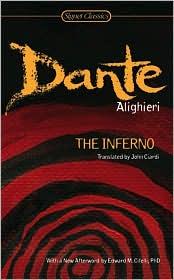
Inferno
Dante Alighieri (1320)
“A poet walks through Hell and finds everyone he ever hated there — then writes the most beautiful poetry in any language to describe their suffering.”
Similar Books
Thematic connections across eras and genres — books that talk to each other.
Dante places Ulysses in Hell and invents a new ending for his story. The Inferno's entire descent structure — the katabasis — descends from Odysseus's visit to the dead in Book 11.
Paradise Lost
John Milton
Milton's charismatic Satan is the deliberate opposite of Dante's frozen, pathetic Devil. The two poems represent the two great visions of evil in Western literature: seductive vs. stupid.
Dante's structural model and the reason Virgil is his guide. Aeneas's descent to the underworld in Book 6 is the template for the Inferno's journey — and Dante intended to surpass it.
Crime and Punishment
Fyodor Dostoevsky
Like the Inferno, a sustained examination of guilt, punishment, and moral clarity. Raskolnikov's journey from intellectual pride to redemption mirrors Dante's journey from the dark wood to the stars.
Heart of Darkness
Joseph Conrad
Marlow's descent into the Congo is a secular Inferno — a journey into the darkness of human nature that reveals, at the center, not a devil but a pathetic, hollow man.
The Stranger
Albert Camus
Meursault in a godless universe is the existentialist response to Dante's ordered cosmos. Where Dante finds justice in every punishment, Camus finds absurdity in every judgment.