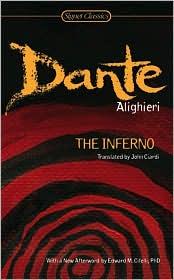
Inferno
Dante Alighieri (1320)
“A poet walks through Hell and finds everyone he ever hated there — then writes the most beautiful poetry in any language to describe their suffering.”
Why This Book Matters
The Inferno is the foundational text of Italian literature and one of the three or four most influential poems in Western civilization. It essentially created the Italian literary language, elevated the vernacular over Latin as the medium of serious art, and provided the Western imagination with its dominant visual vocabulary for Hell, damnation, and divine justice. Every subsequent depiction of the afterlife — from Milton's Paradise Lost to modern horror films — operates in Dante's shadow.
Firsts & Innovations
The first major literary work in a European vernacular rather than Latin — a revolutionary assertion that common languages could carry epic weight
The invention of terza rima — the interlocking rhyme scheme that no subsequent poet has matched in sustained use
The first comprehensive literary mapping of the afterlife as a coherent moral system with internal logic
The first major Western poem in which the author appears as a character within his own fiction
The first systematic application of contrapasso — punishment as logical consequence of sin rather than arbitrary torture
Cultural Impact
Created the dominant Western visual vocabulary for Hell — circles, descending severity, specific tortures for specific sins
Established Italian (specifically Tuscan dialect) as a literary language, directly enabling Petrarch, Boccaccio, and the Italian Renaissance
Influenced virtually every subsequent depiction of the afterlife: Milton's Paradise Lost, Blake's Marriage of Heaven and Hell, Sartre's No Exit
The phrase 'Abandon all hope, you who enter here' entered global common usage
Rodin's sculpture 'The Gates of Hell' and 'The Thinker' (originally Dante contemplating Hell) are direct responses
T.S. Eliot called Dante 'the most universal of poets in the modern languages' and drew heavily on the Inferno in The Waste Land
Botticelli, William Blake, Gustave Dore, and Salvador Dali all produced major visual cycles illustrating the Inferno
Banned & Challenged
The Inferno has never been formally banned by the Catholic Church, despite its explicit condemnation of multiple popes by name. Its status as a supreme achievement of Italian literature and Catholic intellectual tradition has protected it. However, individual episodes have been censored in educational editions — the Muhammad passage in Canto 28 is increasingly omitted or contextualized in modern anthologies, and the graphic violence of the lower circles has been softened in many classroom adaptations.