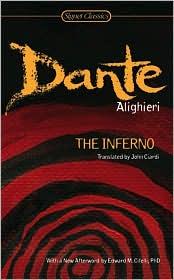
Inferno
Dante Alighieri (1320)
“A poet walks through Hell and finds everyone he ever hated there — then writes the most beautiful poetry in any language to describe their suffering.”
Inferno— Summary & Analysis
by Dante Alighieri · published 1320 · 320 pages · Medieval/Renaissance
A user-friendly study guide for Inferno by Dante Alighieri (1320): a high-level plot summary, full chapter-by-chapter analysis, theme breakdowns, character profiles, and 30 essay questions designed for ap-english, college readers. Unlike a stock summary, sumsumsum.com adds a diction analysis drawn from Dante Alighieri’s actual text, the 7 documented AP Literature exam appearances of this book, and reading-difficulty guidance (Moderate, 4/10) so students, teachers, and lifelong readers know what they are walking into.
“A poet walks through Hell and finds everyone he ever hated there — then writes the most beautiful poetry in any language to describe their suffering.”
Short Summary
Midway through his life, the poet Dante finds himself lost in a dark wood, unable to find the right path. The Roman poet Virgil, sent by Dante's beloved Beatrice from Heaven, appears as his guide. Together they descend through the nine circles of Hell, witnessing punishments that mirror the sins committed: the lustful blown by winds, the wrathful fighting in mud, the fraudulent trapped in ditches of excrement and fire. Each punishment is a contrapasso — the sin turned back upon itself. Dante meets historical figures, mythological characters, and his own political enemies, all frozen in the consequences of their choices. At the bottom, Satan himself is encased in ice, weeping and chewing on Judas, Brutus, and Cassius. Dante and Virgil climb down Satan's body and emerge on the other side of the earth, under the stars.
Detailed Summary
The Inferno opens with one of the most famous lines in world literature: 'Nel mezzo del cammin di nostra vita / mi ritrovai per una selva oscura' — 'Midway through the journey of our life, I found myself in a dark wood, for the straight path had been lost.' Dante the character is thirty-five years o...
Summary in the Author’s Writing Style
A retelling of Inferno in Dante Alighieri’s style — so you can hear the language, not just the plot. This is a stylistic pastiche written by sumsumsum, not an excerpt from the book.
Midway upon the road of this our life I woke and found the straight way lost behind me, and a wood about me, dark and tangled, whose very memory renews the fear—and I cannot tell you how I entered there, so heavy was my sleep when I forsook the truer path. Three beasts came down the slope to bar me …
Chapter-by-Chapter Analysis
If you liked Inferno, read next
Start with The Odyssey by Homer — Dante places Ulysses in Hell and invents a new ending for his story. The Inferno's entire descent structure — the katabasis — descends from Odysseus's visit to the dead in Book 11.. Then try Paradise Lost by John Milton — Milton's charismatic Satan is the deliberate opposite of Dante's frozen, pathetic Devil. The two poems represent the two great visions of evil in Western literature: seductive vs. stupid.. Or pivot to The Aeneid by Virgil — Dante's structural model and the reason Virgil is his guide. Aeneas's descent to the underworld in Book 6 is the template for the Inferno's journey — and Dante intended to surpass it..
More from Dante Alighieri and the scholars who study Alighieri
Other works by Dante Alighieri: The Divine Comedy (1320, 798 pages). Reading two or three of these in sequence reveals Dante Alighieri’s recurring obsessions and stylistic signatures more clearly than any single book can.