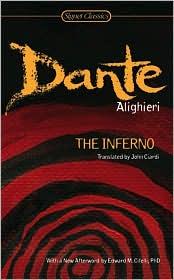
Inferno
Dante Alighieri (1320)
“A poet walks through Hell and finds everyone he ever hated there — then writes the most beautiful poetry in any language to describe their suffering.”
This page prints on a single page. Use Ctrl+P / Cmd+P.
Inferno
Dante Alighieri (1320) · 320pages · Medieval/Renaissance · 7 AP appearances
Summary
Midway through his life, the poet Dante finds himself lost in a dark wood, unable to find the right path. The Roman poet Virgil, sent by Dante's beloved Beatrice from Heaven, appears as his guide. Together they descend through the nine circles of Hell, witnessing punishments that mirror the sins committed: the lustful blown by winds, the wrathful fighting in mud, the fraudulent trapped in ditches of excrement and fire. Each punishment is a contrapasso — the sin turned back upon itself. Dante meets historical figures, mythological characters, and his own political enemies, all frozen in the consequences of their choices. At the bottom, Satan himself is encased in ice, weeping and chewing on Judas, Brutus, and Cassius. Dante and Virgil climb down Satan's body and emerge on the other side of the earth, under the stars.
Why It Matters
The Inferno is the foundational text of Italian literature and one of the three or four most influential poems in Western civilization. It essentially created the Italian literary language, elevated the vernacular over Latin as the medium of serious art, and provided the Western imagination with ...
Themes & Motifs
Diction & Style
Register: Elevated vernacular Italian — Dante chose Tuscan dialect over Latin, a revolutionary decision that declared the common tongue worthy of epic. The register is high but the language is the people's, creating a unique tension between popular speech and cosmic subject matter.
Narrator: Dante is simultaneously author, narrator, and character — a triple identity unprecedented in Western literature. Dant...
Figurative Language: Very high
Historical Context
Late Medieval Italy (1265-1321) — the age of Guelph-Ghibelline conflict, papal power, and the emergence of Italian city-states: The Inferno is inseparable from the factional violence, papal corruption, and intellectual ferment of late medieval Italy. Dante's Hell is populated by real people from his world — popes, politicia...
Key Characters
Talking Points
- The Inferno opens with Dante 'midway through the journey of our life' — not 'my life' but 'our life.' Why does Dante make his personal crisis universal from the very first line, and what does this claim about the poem's purpose?
- Virgil is Dante's guide through Hell — but Virgil is himself one of the damned, living in Limbo because he was born before Christ. How does this fact affect their relationship and the poem's emotional structure?
- Contrapasso means the punishment fits the sin — but more precisely, the punishment IS the sin, experienced eternally. Choose one contrapasso from the Inferno and explain exactly how the punishment reflects the sin's nature, not just its severity.
- Francesca da Rimini tells her story beautifully and Dante faints from pity. But is the reader supposed to pity her, or is the scene constructed as a trap? What does your answer reveal about how the Inferno teaches moral reasoning?
- Dante places many of his personal political enemies in Hell by name. Is this justified as divine poetry, or is it simply revenge? Can a poem be both a work of transcendent art and an act of personal score-settling?
Notable Quotes
“Midway through the journey of our life, I found myself in a dark wood, for the straight path had been lost.”
“Abandon all hope, you who enter here.”
“That day we read no further.”
Why Read This
Because Dante invented the idea that a poem can contain an entire world — and then built one. The Inferno teaches you how allegory works, how a moral system can be made visible, and how a single writer can settle every score he ever had while simu...