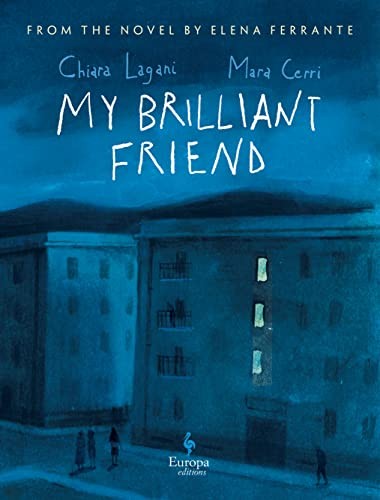
My Brilliant Friend
Elena Ferrante (2011)
“A friendship between two girls in 1950s Naples that is simultaneously a love story, a war story, and a class analysis — told by the one who got out.”
For Students
Because no other novel captures the experience of measuring yourself against a friend this precisely. The jealousy, the admiration, the guilt, the competition that makes you better and worse simultaneously — Ferrante names what most people feel but cannot articulate. And because the novel is also a masterclass in how class works: not as an abstraction but as the daily texture of who gets to keep studying and who gets married at sixteen.
For Teachers
Rich enough for units on class, gender, translation, narrative reliability, and the politics of education. The 'brilliant friend' question — who is the title referring to? — sustains weeks of debate. Pairs powerfully with texts about class mobility (Great Expectations, Educated), female identity (The Awakening, The Bell Jar), and unreliable narration (Never Let Me Go, The Remains of the Day). The plain prose style is accessible to students while the structural complexity rewards close reading.
Why It Still Matters
Social media has made everyone Elena — performing a curated version of themselves while measuring every metric against someone else's. The friend who seems effortlessly brilliant while you work twice as hard for half the recognition? That is Lila. The guilt of succeeding when someone more talented was denied the chance? That is the novel's emotional core. Ferrante wrote about 1950s Naples and described 2026.