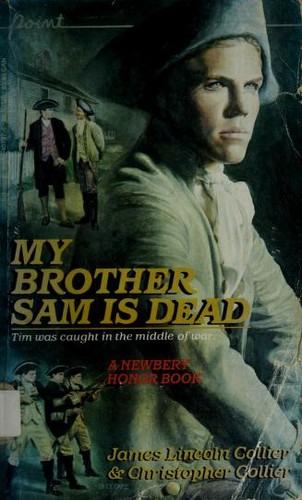
My Brother Sam Is Dead
James Lincoln Collier and Christopher Collier (1974)
“Two brothers. One war. No winners. A shattering story about what the Revolution actually cost the families who lived through it.”
My Brother Sam Is Dead— Literary & Historical Significance
Why This Book Matters
One of the first young adult novels to present the American Revolution as morally ambiguous rather than heroic. A National Book Award finalist in 1975. Regularly named to lists of the most important works of young adult historical fiction. Taught in nearly every American middle school as a counterpoint to more romantic treatments of the Revolution.
Firsts & Innovations
First major YA novel to present a Loyalist family sympathetically without making them villains
First novel for young readers to depict an American soldier executed by his own army as a wrongful death
Among the first American historical fiction titles to include a scholarly historical note for young readers, grounding the fiction in documented fact
Cultural Impact
Established the template for 'honest war' historical fiction for young readers — subsequent books like Fallen Angels and The Things They Carried owe a debt to its approach
Used in social studies classrooms as a counterpart to primary source documents about the Revolution
Sparked ongoing debates about age-appropriate content in school reading — challenged repeatedly for its execution scene and depiction of civilian violence
The Colliers' historical note in the appendix set a standard for historical accuracy in YA fiction that has influenced the genre
Banned & Challenged
Frequently challenged in school libraries and classrooms for its depiction of violence (particularly the execution scene), its 'anti-American' treatment of the Revolution, and its moral ambiguity about whether the war was justified. Challenged in multiple states on grounds that it undermines patriotism. The challenges rather prove the Colliers' point about how America prefers its founding myths.