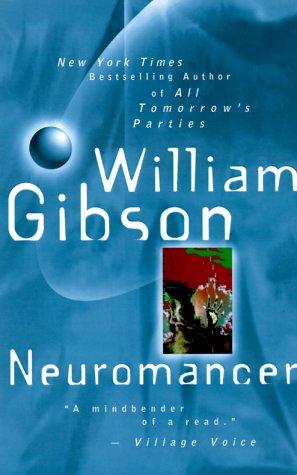
Neuromancer
William Gibson (1984)
“The novel that invented cyberpunk, written by a man who had never touched a computer, on a manual typewriter.”
Why This Book Matters
Neuromancer launched the cyberpunk genre, coined terminology that migrated into real computing and popular culture ('cyberspace,' 'the matrix,' 'ICE'), and predicted the cultural experience of the internet decades before the World Wide Web. It won the Hugo, Nebula, and Philip K. Dick awards — the only novel to sweep all three. It is the foundational text of digital culture, influencing everything from The Matrix to Bitcoin to the aesthetics of Silicon Valley.
Firsts & Innovations
First novel to win the Hugo, Nebula, and Philip K. Dick awards simultaneously
Coined 'cyberspace' as a term for virtual networked reality — now a standard English word
First novel to imagine the internet as an immersive experiential space rather than a communication tool
Launched cyberpunk as a recognized literary genre and aesthetic movement
First major fiction to treat artificial intelligence as a character with agency rather than a plot device
Cultural Impact
The Wachowskis cited Neuromancer as a primary inspiration for The Matrix — 'the matrix' itself is Gibson's term
Silicon Valley adopted Gibson's vocabulary and aesthetic: 'cyberspace,' 'ICE,' 'jacking in' entered tech culture
Influenced the visual design of the internet era — from website aesthetics to the green-on-black terminal look
The novel's zaibatsu vision anticipated the rise of tech mega-corporations (Google, Amazon, Meta) by decades
Spawned an entire literary genre — cyberpunk — with direct successors including Snow Crash, Ghost in the Shell, and Altered Carbon
Gibson's 'the street finds its own uses for things' became a founding principle of technology studies and hacker culture
Banned & Challenged
Occasionally challenged in schools for drug use, sexual content, and violence. More commonly excluded from curricula by the soft gatekeeping of genre prejudice — classified as 'science fiction' and therefore not 'literary,' despite its prose quality, philosophical depth, and canonical status in postmodern studies.