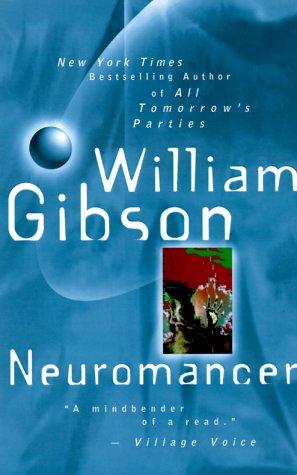
Neuromancer
William Gibson (1984)
“The novel that invented cyberpunk, written by a man who had never touched a computer, on a manual typewriter.”
For Students
Because Gibson predicted your world. Every time you put on a VR headset, scroll through a feed, worry about AI, or feel more real online than off, you are living in the future Neuromancer imagined in 1984. The prose is dense and rewards close reading — every sentence is doing double duty, building world and meaning simultaneously. And the central question — what happens to human identity when technology dissolves the boundary between mind and machine — is the defining question of your generation.
For Teachers
A masterclass in world-building through diction rather than exposition. Gibson never explains his world; he immerses the reader in it, making every page an exercise in close reading and inference. The novel supports rich analysis of posthumanism, corporate power, AI ethics, addiction, and the mind-body problem. It pairs naturally with Blade Runner, The Matrix, and contemporary AI discourse. At 271 pages, it's teachable in 3-4 weeks.
Why It Still Matters
We are now living inside Gibson's novel. AI systems are merging, corporations have transcended national borders, our identities are split between physical and digital spaces, and we are all — every one of us — jacked into a consensual hallucination we carry in our pockets. Neuromancer was science fiction in 1984. In 2026, it reads like history written forty years early.