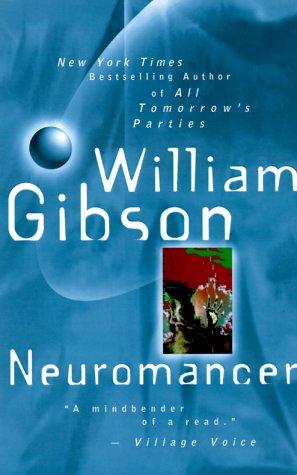
Neuromancer
William Gibson (1984)
“The novel that invented cyberpunk, written by a man who had never touched a computer, on a manual typewriter.”
Neuromancer— Summary & Analysis
by William Gibson · published 1984 · 271 pages · Cyberpunk / Postmodern
A user-friendly study guide for Neuromancer by William Gibson (1984): a high-level plot summary, full chapter-by-chapter analysis, theme breakdowns, character profiles, and 30 essay questions designed for ap-english, college readers. Unlike a stock summary, sumsumsum.com adds a diction analysis drawn from William Gibson’s actual text, the 3 documented AP Literature exam appearances of this book, and reading-difficulty guidance (Moderate, 4/10) so students, teachers, and lifelong readers know what they are walking into.
“The novel that invented cyberpunk, written by a man who had never touched a computer, on a manual typewriter.”
Short Summary
Henry Dorsett Case, a washed-up computer hacker in the slums of Chiba City, Japan, is recruited by a mysterious ex-military officer named Armitage and a street-samurai named Molly Millions for a run against a powerful artificial intelligence. Case's nervous system is repaired so he can jack into cyberspace again, and the team discovers that their employer is actually Wintermute, one half of a twin AI owned by the Tessier-Ashpool dynasty, trying to merge with its other half, Neuromancer. After infiltrating the orbital arcology Villa Straylight and surviving betrayals, hallucinations, and corporate defenses, Case helps the two AIs unite into a single superintelligence that becomes the entire Matrix.
Detailed Summary
Henry Dorsett Case was once the sharpest data thief in the matrix — the consensual hallucination of cyberspace where hackers navigate vast corporate databases as geometric landscapes of light. But Case made the mistake of skimming from his employers, who retaliated by damaging his nervous system wit...
Summary in the Author’s Writing Style
A retelling of Neuromancer in William Gibson’s style — so you can hear the language, not just the plot. This is a stylistic pastiche written by sumsumsum, not an excerpt from the book.
The sky over Chiba was the dead grey of a switched-off monitor, and Case lived under it like something washed up on a beach of broken hardware. He'd been the best, once — a cowboy, a console jockey running the corporate ice for whoever paid — until he skimmed from the wrong men and they fed his nerv…
Chapter-by-Chapter Analysis
If you liked Neuromancer, read next
Start with Snow Crash by Neal Stephenson — The next-generation cyberpunk novel — where Gibson is noir and atmospheric, Stephenson is satirical and kinetic. Snow Crash made cyberspace social; Gibson made it existential.. Then try Do Androids Dream of Electric Sheep? by Philip K. Dick — The predecessor — Dick's androids raise the same questions about consciousness and authenticity that Gibson's AIs do, but Dick is metaphysical where Gibson is material.. Or pivot to Frankenstein by Mary Shelley — The origin of the 'created intelligence' narrative. Shelley's creature wanted love; Gibson's AIs want completion. Both novels ask what the creator owes the created..