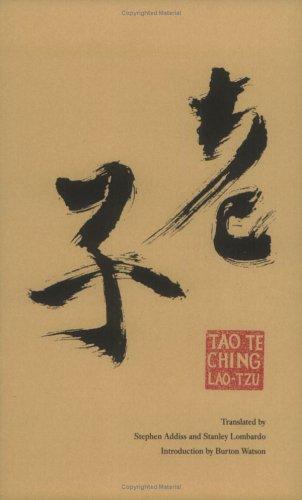
Tao Te Ching
Laozi (-500)
“Eighty-one verses that dismantle everything you think you know about power, language, and the meaning of a useful life.”
This page prints on a single page. Use Ctrl+P / Cmd+P.
Tao Te Ching
Laozi (-500) · 100pages · Ancient Chinese Philosophy · 2 AP appearances
Summary
The Tao Te Ching is a collection of 81 brief verses attributed to Laozi, a semi-legendary Chinese sage of the 6th-4th century BCE. Divided into two parts — the Tao Ching (the Way) and the Te Ching (Virtue/Power) — the text argues that the ultimate reality, the Tao, cannot be named or grasped by intellect. True wisdom comes through yielding, not forcing; true power through softness, not domination. The sage-ruler governs by doing less, not more. Water, which is soft yet carves stone, is the text's master metaphor. The work became the foundational scripture of Taoism and one of the most translated texts in human history.
Why It Matters
The Tao Te Ching is one of the most influential texts in human history. With over 250 English translations, it is the most translated work in the world after the Bible. It became the foundational scripture of Taoism (both philosophical and religious), profoundly shaped Chinese culture for over tw...
Themes & Motifs
Diction & Style
Register: Elevated but compressed — ancient Chinese literary register translated through vastly different English styles depending on translator
Narrator: No narrator in the conventional sense — the text is a collection of sayings, observations, and instructions attribute...
Figurative Language: Moderate in frequency but extremely high in resonance
Historical Context
Warring States Period (~475-221 BCE) — political fragmentation, constant warfare, competing philosophical schools: The Tao Te Ching emerged during a period of extraordinary political violence and intellectual ferment. Every major Chinese philosophical school was attempting to answer the same question: how do yo...
Key Characters
Talking Points
- The Tao Te Ching opens by declaring that the Tao cannot be named or spoken. Then it spends 81 verses speaking about it. Is this a contradiction, a paradox, or a deliberate strategy? What does Laozi gain by undermining his own project from the first line?
- Wu wei is often translated as 'non-action' but could also mean 'effortless action' or 'non-forcing.' How does the translation you choose change the meaning of the entire text? Is Laozi advocating passivity, or something more active?
- Laozi argues that the best leader is one the people barely know exists. Is this realistic governance or utopian fantasy? Can you think of any modern examples — positive or negative — of this principle in action?
- The text uses water as its central metaphor in at least a dozen verses. Why water specifically? What qualities of water map onto the Tao's principles, and where does the metaphor break down?
- Laozi's critique of Confucianism is pointed: 'When the Tao is lost, there is goodness. When goodness is lost, there is morality. When morality is lost, there is ritual.' What is the difference between these four stages? Can you identify modern equivalents?
Notable Quotes
“The Tao that can be told is not the eternal Tao. The name that can be named is not the eternal name.”
“The highest good is like water. Water gives life to the ten thousand things and does not strive.”
“Fill your bowl to the brim and it will spill. Keep sharpening your knife and it will blunt.”
Why Read This
Because every system you live inside — school, social media, career ambition, political opinion — is something this text asks you to question. Not reject, but question. The Tao Te Ching is 2,500 years old and still the most effective antidote to t...