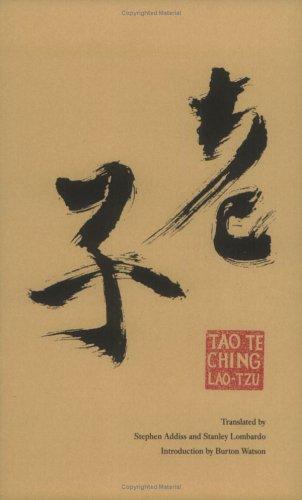
Tao Te Ching
Laozi (-500)
“Eighty-one verses that dismantle everything you think you know about power, language, and the meaning of a useful life.”
Essay Questions & Food for Thought
30questions designed to challenge assumptions and provoke original thinking. These can't be answered from a summary — you need the actual text.
The Tao Te Ching opens by declaring that the Tao cannot be named or spoken. Then it spends 81 verses speaking about it. Is this a contradiction, a paradox, or a deliberate strategy? What does Laozi gain by undermining his own project from the first line?
Wu wei is often translated as 'non-action' but could also mean 'effortless action' or 'non-forcing.' How does the translation you choose change the meaning of the entire text? Is Laozi advocating passivity, or something more active?
Laozi argues that the best leader is one the people barely know exists. Is this realistic governance or utopian fantasy? Can you think of any modern examples — positive or negative — of this principle in action?
The text uses water as its central metaphor in at least a dozen verses. Why water specifically? What qualities of water map onto the Tao's principles, and where does the metaphor break down?
Laozi's critique of Confucianism is pointed: 'When the Tao is lost, there is goodness. When goodness is lost, there is morality. When morality is lost, there is ritual.' What is the difference between these four stages? Can you identify modern equivalents?
There are over 250 English translations of the Tao Te Ching. Compare any two translations of Verse 1. How do the translators' choices change the meaning? What does this tell you about the relationship between translation and interpretation?
Verse 80 describes an ideal society where people have tools but don't use them, boats but don't sail them, and can hear their neighbors' roosters but never visit. Is this a genuine utopia or a critique of civilization? Could you live there?
The Tao Te Ching became hugely popular in the American counterculture of the 1960s. Why? What specific aspects of the text would have resonated with people opposing the Vietnam War, questioning materialism, and experimenting with alternative lifestyles?
'Those who know do not talk. Those who talk do not know.' If Laozi means this literally, the entire text invalidates itself. How do you resolve this paradox — or is the point that you can't?
Laozi says 'The more prohibitions you have, the less virtuous people will be.' Apply this to modern drug policy, internet censorship, or school dress codes. Does the principle hold? Where does it break down?
The text has no characters, no plot, no narrative arc. How does it achieve emotional and intellectual impact without any of the tools that stories use? What replaces narrative as the text's organizing structure?
Compare Laozi's sage-ruler to Machiavelli's prince. Both are concerned with effective governance. Both understand that appearances matter. How are their approaches fundamentally different, and what do those differences reveal about their cultures?
Verse 76: 'The stiff and unbending is the disciple of death. The soft and yielding is the disciple of life.' Apply this to a personal experience — a time when rigidity failed you or flexibility saved you. Does the principle hold in your own life?
Laozi and Heraclitus were near-contemporaries on opposite sides of the world. Both used paradox, both saw change as fundamental, both distrusted conventional knowledge. Is this convergence evidence of universal truth, or coincidence?
The Tao Te Ching influenced Zen Buddhism, which emphasizes direct experience over textual study. Paradoxically, this makes the Tao Te Ching a text that argues against the authority of texts. How does a book convincingly argue that books are insufficient?
Verse 65 suggests keeping people in 'simplicity' rather than educating them. Has this verse been misused to justify authoritarian suppression of education? How do you distinguish Laozi's intent from its potential abuse?
The text says 'the Tao of heaven takes from those who have too much and gives to those who do not have enough. The way of man is different.' Is this an economic argument? How would a Taoist critique modern wealth inequality?
Why does Laozi use the image of the uncarved block (pu) to represent the ideal human state? What is lost when the block is carved? What does 'carving' represent in human development?
The Tao Te Ching has been adopted by Silicon Valley executives, military strategists, psychotherapists, environmentalists, and libertarians. Can a text genuinely mean all these things, or are these readers projecting their own values onto an ambiguous text?
Laozi's 'three treasures' are simplicity, patience, and compassion. Compare these to any other tradition's core virtues — Christian theological virtues (faith, hope, charity), Aristotelian virtues, Buddhist paramitas. What does Laozi include that others don't? What does he leave out?
The text argues that emptiness is the source of usefulness — the hollow pot, the empty hub, the vacant room. How does this principle apply to the mind? Is Laozi advocating for intellectual emptiness or something else?
'Governing a great nation is like cooking a small fish.' Unpack this metaphor fully. What is the fish? What is the cooking? What does 'too much stirring' look like in governance?
If Laozi could observe modern social media, what would he say? Frame your answer using at least three specific concepts from the text (e.g., wu wei, the uncarved block, the dangers of naming).
The legend says Laozi wrote the text only because a gatekeeper asked him to, then vanished into the wilderness. How does this origin story reinforce or contradict the text's own teachings?
Compare the Tao Te Ching's approach to death with that of any Western text — Hamlet, The Epic of Gilgamesh, the Book of Ecclesiastes. How does Laozi's acceptance of mortality differ from Western anxiety about it?
Verse 2 says that when people recognize beauty, ugliness is created. Does this mean aesthetic judgment is inherently harmful? Should we stop distinguishing between good and bad art, good and bad writing?
The Tao Te Ching influenced martial arts philosophy, particularly the internal arts (taijiquan). How do the principles of yielding, softness, and non-forcing translate from text to physical practice? Is the body a better medium for these ideas than language?
Laozi says the sage 'keeps his half of the bargain but does not exact his due.' Apply this to a conflict in your own life. What would it mean to absorb a loss rather than demand justice? Is this wisdom or doormat behavior?
Ursula K. Le Guin, a science fiction novelist, produced one of the most celebrated English versions of the Tao Te Ching. Why would a fiction writer's translation resonate differently than a scholar's or a monk's? What does a novelist bring to the text?
The final verse says 'True words are not beautiful. Beautiful words are not true.' Apply this standard to the Tao Te Ching itself. Is the text beautiful? Is it true? Can it be both — or does Laozi's own principle forbid it?